
Opinion Dabbas and R&D
I belong to a generation in which dabbas were shared.
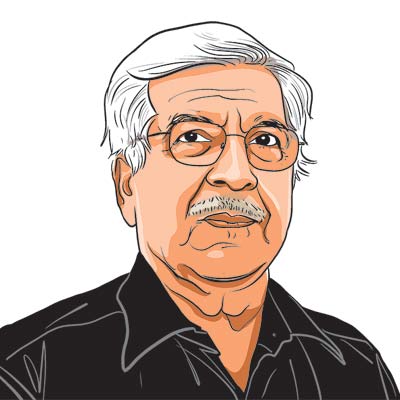

Mihir Sharma wrote a very interesting piece in the EYE on dabbas at work and the distinctions and deprivations which arise when some have lunch dabbas and others dont. I belong to a generation in which dabbas were shared.
One of us would be the major domo and distribute what the pot luck had for the day. At my institute he for some time had spouse away and so no dabba.

So I innocently asked why doesnt he have a dabba. I was told he is the Coordinator so he doesnt need a dabba. In all my jobs there has always been a coordinator.In the Planning Commission it was Nitin Desai in my first round and S.R.Hashim in the second.
In the BICP it was the railway man N.T. Srinivasan. But the importance of dabbas lies outside the brotherhood of dabbawallahs.
The shared lunch becomes an Idea Exchange. In the Planning Commission we were the center of gossip and ideas. In the emergency ideas were discussd by word of mouth and everybody visiting knew that Yoginders office was the place where they all congregated.
So we would find out all really happening everywhere. The visitors would be others in Government. I remember Arjun Sengupta and Y.V.Reddy many times amongst others. Journailist were there. Kewal Verma,Suman Dubey and many others. Prannoy Roy and Ashok Lahiri cut the teeth of their first forecasts on us,when still in the Delhi School and many others. In the BICP lunch dabba it was always reform.
But it was in my research job in Ahmedabad that the dabba magic really worked. The HR specialist Uday Parikh and I think Kamla Chaudhari,I discovered later had a piece on the importance of the canteen culture in academic management. Their argument was that over tea senior people would talk of what the outside world was saying in terms of need of ideas and the younger ones would latch on.
Again in the canteen older scholars would find out what the youngsters were doing and in their trips outside talk of research in its nascent phase to policy makers and others . This led to many synergies.
This where the complete demand systems and poverty lines emerged. It was here that models of agro climatic and decentralization were talked of.
It is here that a Lakdawala would in his liberal style cut but also rehuvenate.Some of the top policy makers and academic managers in India today are my canteen buddies over dabbas. I can truthfully say: What would I have done without my dabba?
 Share
Share


