
Opinion The undoing
Great power intervention seems set to make the Syrian crisis more intractable.
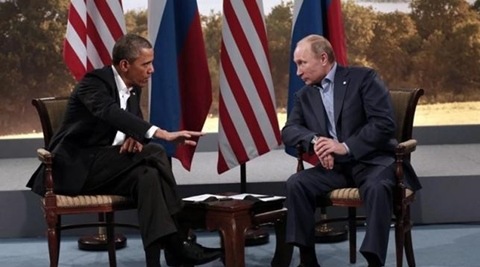



Four years after the so-called Arab Spring began, sparking gushing commentary about the dawn of a new age of democracy, West Asia is being violently remade. No one knows where the pieces might fall. The world’s two great powers — Russia and the United States — are now both militarily committed in the conflict tearing apart Iraq and Syria. Though they share common enemies, the Islamic State and al-Nusra, their ideas on how to address the situation diverge deeply. The US-led coalition continues to sponsor groups determined to bring down President Bashar al-Assad’s regime in Syria; Russian jets and military advisors, along with Iranian forces, are committed to keeping him in power. Great power intervention seems set to make the crisis more intractable than ever. Just this week, the US supplied 50 tonnes worth of munitions to forces fighting Assad, even as Russian combat jets bombed them.

There are, broadly, three theories about precisely why President Vladimir Putin has committed his military to Syria at a time when it is facing severe financial constraints. Putin, some argue, genuinely sees a strategic interest in containing a crisis that has empowered jihadists inside Russia and Central Asia, believing them to be a civilisational threat. There are others who believe his real objective is to put himself in a position to trade Moscow’s last patch of influence in West Asia for an end to western support for Ukraine. Inside Russia, Putin’s critics contend he’s committed himself to a war Russia doesn’t have the resources to win, and will make the country an even more attractive target for global jihadists. His supporters, conversely, see the Syrian intervention as a long-overdue assertion of global influence.
Either way, the two great powers need to arrive at a shared vision of what West Asia will look like at the end of their interventions — or risk their campaigns degenerating into endless battles of attrition against enemies who have demonstrated the ability to wear them down. Neither Russia’s intervention, with Iran, nor the US-led coalition has the military muscle to decisively overturn the course of the war. Their presence can, at best, allow space for the structures of nation-states to be revived and made functional. The status quo will bring more killing, not peace.
 Share
Share


