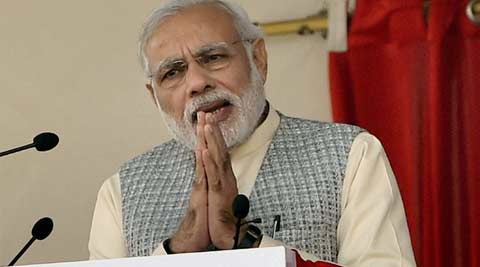

If 2014 was the year of the decisive mandate, the message of 2015 was that in a democracy like India today, a majority is not enough. That message was found, most of all, in what has come to be known as the intolerance debate. Beyond the name-calling, and outside of attempts by the BJP’s political opponents to encash it, it gave vent to a gathering unease about the settling in of majoritarian triumphalism and certitude in the wake of the Modi victory. The Congress sought to take advantage, but the intolerance debate was not of its making. And in that lay much of its potency. It drew upon seemingly disparate incidents — the lynching of a man on the suspicion of storing or consuming beef in Dadri, the murder of a rationalist in Dharwad, the smearing of a dissenter’s face with ink in Mumbai. It was fuelled by the silence that emanated from the top echelons of government as response. But in its best version, the intolerance debate was made up of citizens of a country of many minorities talking back to a new government that seemed to be emboldening the old divisive ways.
As the new year begins, the Modi government would do well to reflect on a mandate based on expectations of change. Sure, the 2014 verdict was about a charismatic leader and the rousing of the Hindutva faithful. But a Lok Sabha tally of 282 was made possible only by a Hindutva plus. What was added to the older incitement was a wider appeal that straddled and softened the faultlines of community, caste and class. If in the 1990s, politics had seemed to fragment and electoral outcomes reflected that reality in the onset of coalitions at the Centre, the Modi verdict flagged a change that had begun at the turn of the century. Pro-incumbency verdicts were edging out a rote anti-incumbency, and there was a blunting of divides and traditional strongholds. Votebank politics appeared to have reached a point of saturation and a new coming together of voters was reflected in the large majorities that catapulted to power an Akhilesh Yadav in Uttar Pradesh, or a Nitish Kumar in Bihar. The scale of their victories could only be explained by a massive crossing over, across the established lines.


