

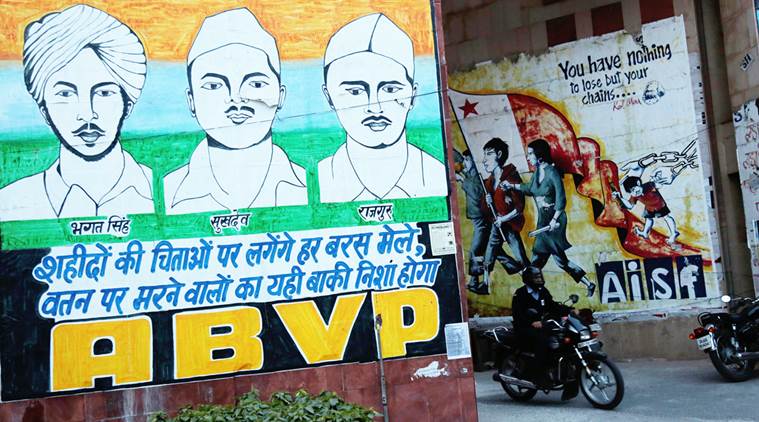
A government panel with the mandate to make suggestions for the new national education policy has frowned upon political activity on campus. Among the special restrictions proposed by the T.S.R. Subramanian panel: Colleges and universities should consider derecognising student groups based “explicitly on caste and religion”. Echoing the disdain and discomfort visible in the ruling dispensation with regard to campus politics — except, of course, that of the ABVP — the committee has expressed concern that “agitations, disturbances, gheraos and other disruptive movements are being increasingly witnessed on campuses”, which it thinks is interfering with “normal academic activities”. These recommendations are ill-thought through if not downright anti-democratic.
Historically, campuses have been crucibles of leadership. College and university students are active citizens with voting rights to general, assembly and local body elections. It is absurd and even undesirable to expect them to be immune to, and insulated from, political ideas and debates. Equally, the political behaviour and modes and language of organising of students are likely to be influenced by the political activity outside the campus. The fact is, caste and religion are markers of political identity in India and parties, covertly and overtly, mobilise around them. What is often labelled “casteist” politics has provided valuable space for the expression and assertion of interests of historically disprivileged groups. In its best version, campus politics is a platform for questioning congealed inequalities and prejudices and a force for greater social inclusion. In fact, the absence of debate and agitation over larger social and political issues on campus in an argumentative democracy ought to be viewed as abnormal.


