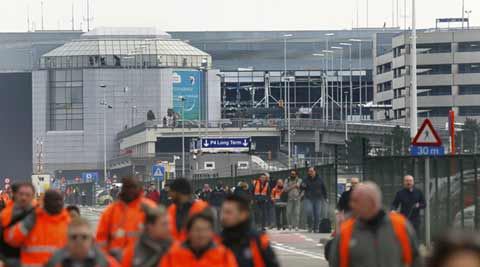

Tuesday’s carnage in Belgium isn’t the most savage act inspired by a toxic ideology, nor exceptional in its scale. The perpetrators see the strikes as part of a long war that will bring about a civilisational apocalypse, and herald the coming of god’s order on earth. In a Europe already fractured by debates over immigration and race, the bombings in Brussels could give legitimacy to the xenophobic forces that have been working to exploit these strains for political gain. Last year, Paris showed the world how great societies ought to deal with the challenge of terror, uniting people of all faiths against the savageries of a blood-cult. Belgium’s ghettoised Muslims faced alienation and threats after the Paris attacks, contributing to the divisions which feed the jihadist movement. The spirit of Paris will be needed in Brussels in the coming days and weeks — as the strength of European democracy is tested.
India — like Europe, a society divided and frightened by violence — needs to learn some lessons from Belgium. First, fighting terrorism needs patient investments in intelligence and police capacity. Bilal Hadfi, one of the suicide-bombers who targeted Paris last year, was identified as a jihadist, but Belgium’s under-resourced police lost track of him. Ibrahim Abdeslam, another suicide bomber, was also questioned by the police, but could not be monitored thereafter. His brother Salah Abdeslam was known to have travelled to Syria for jihad — but succeeded in buying detonators in France, with his driving licence. Better intelligence-sharing systems could have prevented the tragedy, but the right investments weren’t made in time. In 2015, Home Minister Rajnath Singh claimed Indian “family values” would deny the Islamic State space in the country. That claim has been punctured. Yet, there is no sense of urgency: Police modernisation funds, slashed two years ago, haven’t been enhanced despite the growing threat, while the short-staffed intelligence services have been forced to cut training time for new recruits.


