
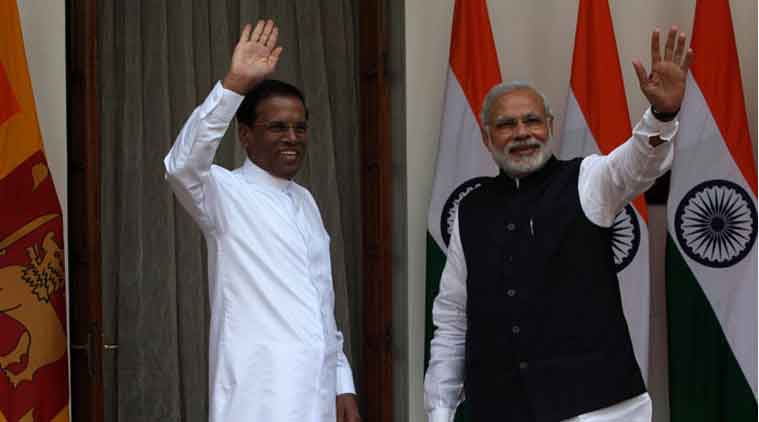
Sri Lankan President Maithripala Sirisena’s four-day visit to China was part of a delicate balancing act being executed by Colombo. Under former President Mahinda Rajapaksa, Sri Lanka had drifted close to China in ways that made it seem unconcerned about India’s sensitivities. There was no progress on the Tamil question. Sri Lanka also hosted two Chinese submarines last year, which made New Delhi apprehensive about its security and contributed to its reservations about the Chinese Maritime Silk Road (MSR) project. In January’s general elections, the opposition front led by Sirisena had promised a more “balanced” foreign policy. Sirisena thus made India his first foreign destination as president last month and Prime Minister Narendra Modi paid a quick return visit this month. In the event, Sirisena’s visit to China was an indication that while Colombo would like to nuance its ties with Beijing, it would not like to alienate China.
India, however, was not the only factor that has compelled a recalibration of Sri Lanka’s foreign policy. It also has to do with domestic dynamics. China got too closely identified with an increasingly unpopular Rajapaksa and the opposition came to view China’s investments in Sri Lanka as evidence of crony capitalism. Sirisena’s alliance, for instance, not only alleged that the interest rates on Chinese loans were too high but also raised questions about the financial viability of ventures such as the $1.5 billion Colombo Port City project, which Sirisena suspended pending a review of environmental and corruption issues.


