

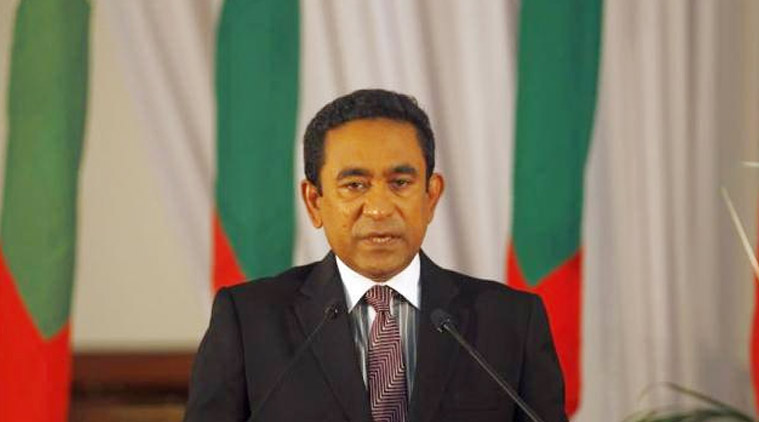
For a government led by a party born in the crucible of India’s own Emergency, there ought to have been no indecision on this issue. Yet, faced with the Maldives’ decision to dismantle the constitutionally guaranteed rights of its citizens, New Delhi has chosen silence as its strategy. The US, UK and several European states have called on President Abdulla Yameen to roll back his proclamation of an emergency on Wednesday; India has said only that it is “closely watching the situation”. The Maldives government’s case for the emergency is that some armed individuals, possibly loyal to the country’s incarcerated vice president, are planning acts of violence. Yet, it also insists that tourists are safe, making clear these threats are not of dangerous. There has been no explanation of why these threats, moreover, require the abrogation of citizens’ rights to freedom of expression and assembly, or their protections against arbitrary detention.
Niccolo Machiavelli, the realist philosopher, urged rulers to base policies on “the effectual truth of the matter rather than the imagined one” — in other words, to base their decision-making on the sum of practical conditions. This is what Delhi imagines it is doing. India’s silence on the Maldives emergency, like its relationship with the military junta in Myanmar, is driven by fear that confrontation might tilt these regimes towards China. India’s strategic community has long hailed this as realism, seeing it as a welcome departure from the ideologically driven excesses of earlier decades.


