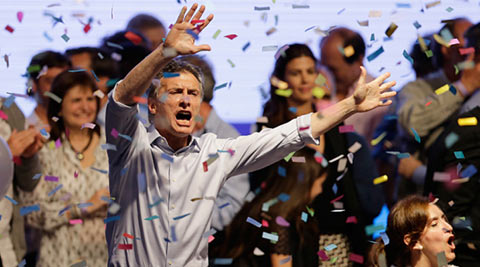

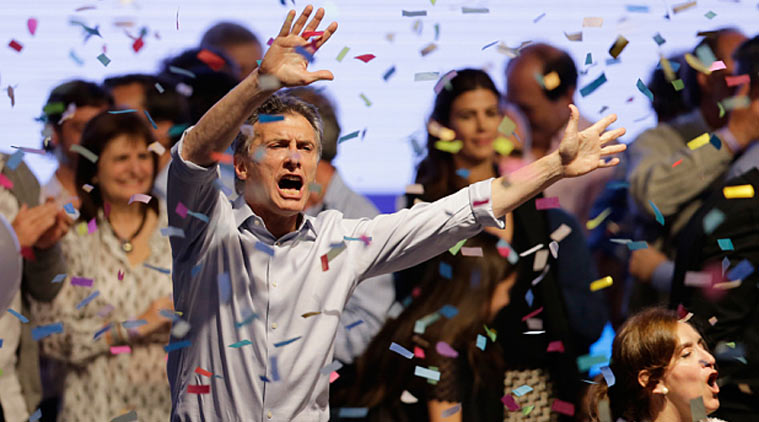
Mauricio Macri’s victory in Argentina’s first-ever presidential run-off ends 12 years of Kirchnerismo (Kirchnerism). Kirchnerismo, the late Nestor Kirchner and his widow Cristina Fernandez de Kirchner’s own version of Peronism — Argentina’s entrenched populism — had rescued Argentina from its 2001-02 meltdown and a $100 billion debt default, but had long outlived its utility. Under outgoing President Cristina Kirchner — constitutionally barred from a third consecutive term — the economy was brought to its knees, with a second debt default last year and a humiliating ban on Argentina from borrowing on international capital markets. The state exercised greater control on the economy, imposed high taxes on agricultural exports and used the money to fund populist programmes. Coupled with currency and capital controls, this left the economy in a shambles, with economists putting the real inflation figure at close to 26 per cent against the official 14 per cent.
The electorate appears to have decided that it’s time for a more sweeping change than voting in Kirchner’s handpicked successor Daniel Scioli. Macri’s party Cambiemos (Let’s Change) promised big reforms, reorienting the economy towards the market and scrapping currency controls. But, given that he inherits an economy set to contract next year, a high budget deficit and foreign debt, Macri will have his task cut out. Nor will it be politically easy to cut welfare and sundry state spending.


