
Opinion A critic, an artist
John Berger’s willingness to experiment and streak of irreverence that marked his work will keep him relevant.
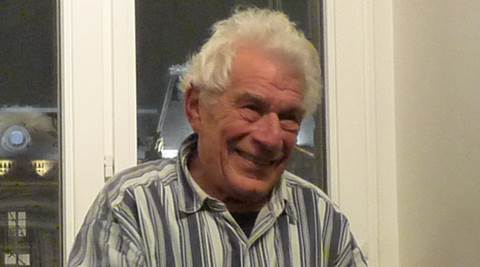


The purpose of the critic, in an ideal form, is more than just providing a tabulation of aesthetic feats and flaws, capped with a recommendation. A good critic can open up a world to the layman and provide a framework that goes beyond personal taste, anchoring both art and artist in the larger world for the audience. John Berger, who died at 90 on Monday, did just that for at least two generations and Ways of Seeing, his most widely-read work, will remain seminal to the understanding of art for the foreseeable future.
It is perhaps because Berger was an artist before he became a critic and novelist that he was able overturn the assumptions of traditional criticism which evaluated artworks from a formal perspective. Berger brought in social and political context — like the sexism of the nude painting or the elitism of portraiture. While much of the 1970s was a celebration of abstract expressionism, Berger championed the role of an artist as a realist. In the Into Their Labours trilogy, he chronicles, through fiction, a traditional, peasant society as it negotiates a changing world. He also lived by the political morality that informed his critical and fictional work. When he was awarded the Booker prize for his novel G., Berger donated half his prize money to the British Black Panthers, while criticising the company that awarded the prize for its treatment of workers in the Caribbean.

John Berger’s willingness to experiment and to hold on to the streak of irreverence that marked his work is what kept him relevant. In the BBC adaptation of Ways of Seeing, as fascinating today as it was when first telecast in 1972, Berger became a voice and face of a left, egalitarian and accessible approach to understanding and appreciating art — from classical paintings to photography and cinema. By opening up a usually opaque world, Berger gave us as a critic, what we demand from an artist: A new perspective.
 Share
Share


