
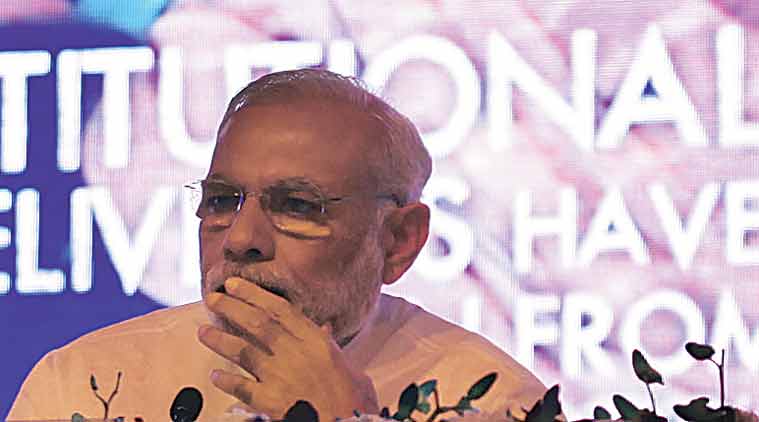
At a time when he is being pilloried by the Opposition for being “pro-corporates”, Prime Minister Narendra Modi’s bid to reach out to industrialists, bankers and economists, to understand the nature of opportunities for India in a time of global stress, was a bold move. Cynics may dismiss it as perfunctory. But in the absence of a structured or institutional mechanism, this meeting sought to open up an avenue for dialogue with the private sector. It sent out a powerful message — that the corporate sector is an important stakeholder in and contributor to Modi’s agenda for development, the poll plank that catapulted him to power last year.
Previous governments had established forums to hear out the corporate sector and seek policy inputs. The NDA government in 1998 under Atal Bihari Vajpayee set up a framework for periodic interaction. Under Vajpayee’s chairmanship, it set up two structured forums — the Economic Advisory Council (EAC) and the Council on Trade and Industry. As prime minister, Manmohan Singh continued with the practice. In fact, with C. Rangarajan as its chairman, the EAC became a powerful body, and apart from acting as a sounding board for the PM, it provided inputs on a range of sensitive issues, such as J&K reconstruction and the pricing of petroleum products. The finance ministry in UPA I had also set up an Investment Commission that made recommendations on sectoral issues. And the Trade and Economic Relations Committee advised the government on its agreements with other trade blocks in the larger global context.


