
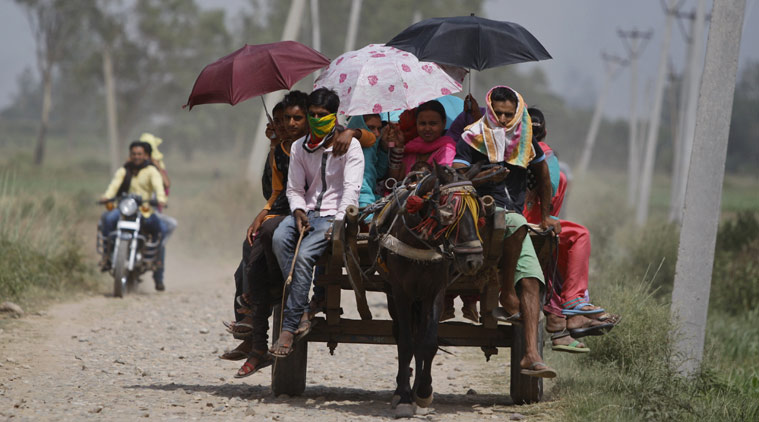
Over 2,000 deaths due to the heat wave have been reported across the country, most of them from the states of Andhra Pradesh and Telangana, where summer has peaked with temperatures rising four to five degrees above normal. Many of these deaths could have been avoided if the state governments had contingency plans to face the summer heat. Barring Ahmedabad, no Indian city — or state — has a heat wave action plan (HWAP), or a system of protocols and procedures to initiate administrative action in the event of a heat wave as well as to facilitate long-term planning.
Most heat wave deaths are a result of direct and sustained exposure to the sun and hot winds and the resultant dehydration. Taking basic precautions during heat wave conditions — keeping away from the sun and drinking water or liquids like butter milk — and ORS treatment in the event of a crisis, would help. But a more organised effort may be needed to reach out to vulnerable groups, mostly the elderly, the malnourished, children and manual labourers. After an unprecedented heat wave in 2003 caught Europe by surprise and resulted in thousands of deaths — 15,000 people died in France alone — most European countries have worked out HWAPs to ensure that warnings go out early and the administration is prepared to deal with the consequences. Though HWAPs vary according to local conditions, they focus on three aspects: building public awareness and community outreach, initiating early warning systems and training healthcare workers to deal with emergencies. In India, the Met department releases advance data on weather, but in the absence of an action plan, the import of the data is lost. Andhra Pradesh and Telangana, where over 1,300 died, did not have a plan.


