Slogans of the Second Freedom Struggle,references to the political class as kale angrez,Anna Hazare as Gandhian and even Gandhi,the wearing of the Gandhi topi,the projection of the fast-unto-death as a Gandhian method,have all evoked linkages with the struggle for Indian Independence. Many enthusiastic TV reporters,swayed by the sight of swelling crowds,added their bit by calling it the biggest movement since Independence. Was this just hyperbole or did people really believe they were heralding the second freedom struggle? If they did,it is a serious matter indeed,and we need to examine whether a comparison is valid. Are there similarities,in worldview, ideology,organisation,methods,nature of leadership,mass support? My understanding is,there is little in common between that epic struggle and the agitation led by India against Corruption.
The first difference is the role of ideology or worldview. The national movement was built around a very sophisticated ideological discourse,most of which was developed by the first generation of nationalists,erroneously called Moderates,who were towering intellectuals. Dadabhai Naoroji,R. C. Dutt,Ranade,Gokhale,G. Subramania Iyer,were among those who grounded Indian nationalism firmly on the foundation of anti-imperialism by fashioning the worlds first economic critique of colonialism,before Hobson and Lenin. The critique of imperialism based on political economy prevented Indian nationalism from straying into the dangerous alleys of cultural nationalism,the cloak under which Hindu communalism masqueraded as Indian nationalism. Since neither Hindu nor Muslim communalists were anti-imperialist in worldview,they couldnt gain legitimacy as nationalists.


Another area of difference is that while the current agitation lacks an organisational framework of its own,Gandhijis first task in 1920 when he took over the leadership,was to fashion the INC into a country-wide organisation based on annual elections from the village and mohalla level upwards till the AICC. It is the organisation that provides the ideological ballast and the mobilisation and discipline required for a successful struggle. In its absence,forces with strong organisational networks are likely to appropriate the gains,and yoke them to other ideological agendas,perhaps never imagined by the initiators of the struggle. The presence of the RSS version of Bharat Mata on the stage backdrop,the dialogue with Narendra Modi,the visit of Ram Madhav of the RSS to Jantar Mantar raise serious apprehensions about this appropriation. Movements without clear-cut ideologies,and lacking their own organisational structures,are prone to this danger,as indeed happened in the JP movement as well. If a leader like JP,with far greater intellectual and political stature,could fall prey to the ideologically and organisationally powerful forces of the RSS,are we not justified in worrying about the present leadership?
Another vital difference is in the attitude to politics,the political process and politicians. The national movement sought to bring the whole of civil society into politics. Gandhijis great contribution was to make political beings out of Indias apathetic dumb millions,not to tell them to shun politics. While critiquing its weaknesses,Gandhiji made it clear that the Congress stood for a parliamentary form of government,with full civil liberties. The disdain for the political class and the political processes of representative democracy witnessed recently is most dangerous because it delegitimises the democratic system,thus giving strength to authoritarian,fascist and militaristic alternatives.
Also striking is the vast difference in the nature of the leadership. Anna Hazare would surely be the first to dismiss being likened to Gandhiji,given that he was quick to retort that you need the methods of Shivaji along with those of Gandhi when challenged as to how his call for capital punishment to the corrupt could be termed Gandhian. The Gandhian method of boycott and picketing of liquor shops and of their customers is far removed from the reported flogging of alcohol consumers in Annas village! The weapon of the fast,in Gandhijis hand,was a subtle instrument,used only when all other methods were shown to have been tried and failed,and was wielded with a surgeons precision to arouse the moral conscience of the people and appeal to the heart of the opponent. Gandhiji himself had expressed reservations about its use in a democratic framework in independent India. Who can deny that its indiscriminate use has robbed it of the moral power it had acquired in the days of the freedom struggle?
It is true that people in general are angry and have suffered a blow to their self-esteem with the spate of scams and leaks in recent months. It is easy to use this anger to build an atmosphere of populism by promising instant solutions such as the Jan Lokpal Bill. But leadership is about exercising restraint as much as it is about arousing outrage.
However,the political class and the Indian state can only ignore the warning signals sent by the popular response to the call for rooting out corruption at their own peril. Peoples concerns have to be understood,respected and addressed,but in a manner that strengthens our constitutional democracy,the enduring legacy of our freedom struggle.
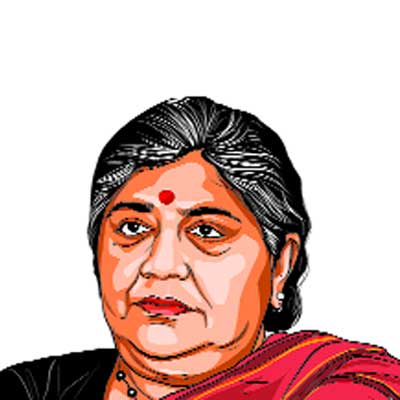
The writer is professor of modern Indian history,JNU,and director of the Nehru Memorial Museum and Library


