

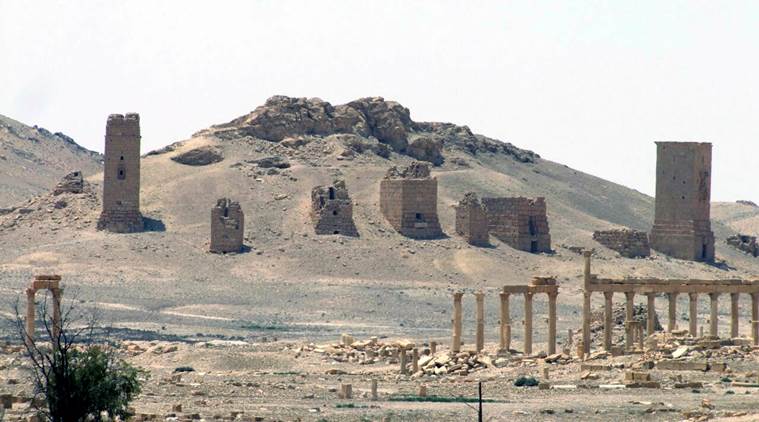
Last month’s horrific destruction of the archaeological site of Palmyra by the Islamic State (IS) is the latest example of ideologically driven vandalism meant to shock those who care about great human cultural achievement. Like their ransacking of the Mosul museum and the sites of Nineveh this spring, and the Taliban’s destruction of the Bamiyan Buddhas in 2001, the stated goal of such destruction is to eradicate idolatry seen as blasphemous to a particular religious perspective. But the real aim is to grab attention and destroy something that the global community deems valuable — because they can.
Such destruction is no doubt tragic and a great loss to the appreciation of culture around the world. But such actions are not new — they have occurred since antiquity as a way of attacking the very identity of a group that might see such monuments and works as constitutive of its culture. Many of the greatest artworks of the Mesopotamian Bronze Age were, in fact, discovered by archaeologists in Susa, a site in southern Iran, where they had been taken. Ancient texts often speak of razing cities and sowing salt instead, showing that it is not only people who were conquered, but buildings themselves that had to be destroyed in order to symbolically erase another group. It was only in the past century or so that rules of conduct during wartime outlawed the intentional destruction of culturally significant monuments, buildings and objects.


This is not to say that tangible things are not worth preserving. In many cases, people are willing to give up their lives for the objects and monuments they value — most recently illustrated by Khaled al-Asaad, the chief of antiquities at Palmyra, who refused to open the site to the IS and paid with his life. Images, as art historian David Freedburg has so eloquently shown, have “power”, and history has witnessed countless episodes where art or objects were safeguarded in the midst of mortal danger, or vandalised because people felt threatened by their power, and so felt the need to neutralise them in some way.
But the wanton destruction of archaeological sites and cultural monuments will continue so long as the global community continues to express shock and outrage each time it happens. The perpetrators want just such a reaction. If the destruction of objects and sites in Syria grab bigger headlines than the ongoing plight of the Syrians themselves, this may lead hopeless people there to sympathise with the IS and regard the rest of the world as having its priorities.
We ought to pay attention to Syria for the sake of its people — those refugees who risk drowning and commit to living forever displaced from their homes, those living in shelters and camps trying to avoid the fighting, and those staying behind to defend the homes they have lived in all their lives. We can care about sites and monuments too — not because they are important for “us”, but because they are part of communities where people have been working, living and dying for thousands of years. “Saving culture” does mean preserving objects. But it also must mean safeguarding the people and communities that live with it and carry it into the future.
The writer, associate professor of anthropology at Queens College, City University of New York, is an editor for the Oxford Companion to Archaeology, Second Edition.


