
Opinion When a Gorakhpur leader forced a Presidential Reference
The tensions began when Keshav Singh and two colleagues distributed their pamphlet outside the Assembly in Lucknow, accusing Congress MLA Narsingh Narain Pandey of corruption. Pandey was outraged not only by the allegations but also by the fact that the pamphlet had been circulated at the gates of the legislature.
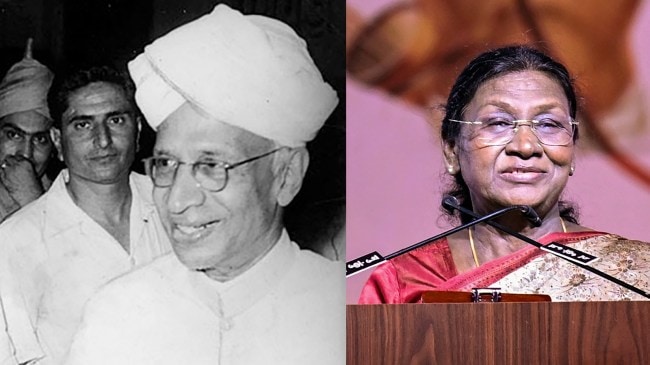 Between the Presidential references of S Radhakrishnan (1964) and Droupadi Murmu (2025) lies a simple but durable principle: No institution can claim authority so wide that it disables another

In the spring of 1964, a small pamphlet printed in Gorakhpur unexpectedly pushed the Indian Republic into a constitutional crisis. It carried a long title, ‘Exposing the Misdeeds of Narsingh Narain Pandey’, and was written by Keshav Singh, a Socialist Party worker with little political clout beyond his district. Yet what began as an obscure protest pamphlet soon travelled to the floor of the Uttar Pradesh Legislative Assembly, then into the corridors of the Allahabad High Court, through the Prime Minister’s Office, and finally to the Supreme Court through a Presidential Reference. The questions raised then about the limits of institutional authority have returned today in a different form, as the Supreme Court has now pronounced on the 2025 Presidential Reference concerning the powers of Governors to delay or withhold assent to Bills.
The tensions began when Keshav Singh and two colleagues distributed their pamphlet outside the Assembly in Lucknow, accusing Congress MLA Narsingh Narain Pandey of corruption. Pandey was outraged not only by the allegations but also by the fact that the pamphlet had been circulated at the gates of the legislature. The Assembly summoned the authors. Singh’s colleagues appeared on February 19, 1964, accepted a reprimand and left. Singh did not. He claimed he lacked the money to travel from Gorakhpur. The Assembly ordered his arrest.

When Singh was brought before the House on March 14, he refused to cooperate. He would not confirm his name, stood with his back to the Speaker, and sent a letter describing the warrant for his arrest as tyrannical. MLAs were livid. Chief Minister Sucheta Kripalani moved a motion to punish him. The House sentenced him to seven days in prison.
On March 18, with a day left of his sentence, Singh’s lawyer, Solomon, filed a habeas corpus petition in the Allahabad High Court. The petition came before Justices Nasirullah Beg and G D Sehgal. When the State’s counsel, K N Kapur, failed to return after a short adjournment, the judges heard the matter in his absence and ordered Singh’s release on bail. What the High Court considered a straightforward constitutional duty was regarded by the Assembly as an intrusion into its privilege.
On March 20, the Speaker placed before the House a resolution that stunned the State. Singh was to be taken back into custody. Solomon was to appear before the House. And, in a move without precedent, the two judges who granted bail to Keshav Singh were summoned to be produced before the Assembly in custody. The judges first heard the announcement on All India Radio. The next morning’s Northern India Patrika confirmed what many believed was unthinkable.
The judges sought protection from the High Court. Article 211 of the Constitution prohibits discussion of judicial conduct within a legislature. Chief Justice M C Desai of the High Court returned to Allahabad and faced a unique administrative dilemma. If he assigned the matter to any one or two judges, they too could be summoned by the Assembly. It was proposed that every available judge hear the case together. The idea was accepted. Twenty eight judges assembled in a courtroom not designed for such a gathering. Chairs filled the aisles. Some judges sat in rows behind the bench. The court stayed the Assembly’s resolution and provided temporary protection to the judges and to Solomon.
The stay by the High Court and the resolution of the Assembly confronted civil servants with two contradictory commands. Caught between these competing obligations, the Divisional Commissioner of Lucknow quietly proceeded on leave to gain time. Offices in the Secretariat grew uneasy. Files moved hesitantly. No one wanted to be the officer who guessed wrong in a contest between two institutions both claiming constitutional legitimacy.
The controversy travelled to Delhi. The Prime Minister was briefed. The Union Cabinet concluded that clarity would not emerge without judicial interpretation. President S Radhakrishnan invoked Article 143 and sent a Presidential Reference to the Supreme Court. The questions were fundamental. Could a legislature claim immunity from judicial review? Could citizens be punished for approaching courts? Could sitting judges be summoned for judicial acts? Could legislative privilege override the right to personal liberty?
Chief Justice P B Gajendragadkar constituted a bench of seven judges. The Court examined British parliamentary practice, pre Independence privilege cases, and the architecture of Articles 194, 211 and 21.
By the end of 1964, the Supreme Court delivered an opinion that restored equilibrium. It held that the Assembly had exceeded its powers, that the High Court had jurisdiction to examine the legality of Singh’s detention, and that neither Singh nor Solomon had committed contempt by approaching the courts. Judges could not be summoned for judicial acts. Privilege could not extinguish constitutional rights. Personal liberty could not be sacrificed to expansive claims of legislative authority. Judicial review remained indispensable to the constitutional structure.
The verdict drew criticism at a national conference of presiding officers, where several argued that the Court had weakened legislative autonomy. But proposals to amend the Constitution faded. The advisory opinion endured. It became an anchor for later disputes about institutional limits.
The writer is an academic lawyer and a public policy professional focusing on democratic institutions and access to justice

 Share
Share


