
Opinion Modi 3.0 wants to take India to new economic heights. Where is the roadmap?
With structural transformation stalling, private investment cycle yet to take off and upward mobility restricted due to limited job creation and subdued wages, the government has its work cut out in tackling the economy’s continuing weakness
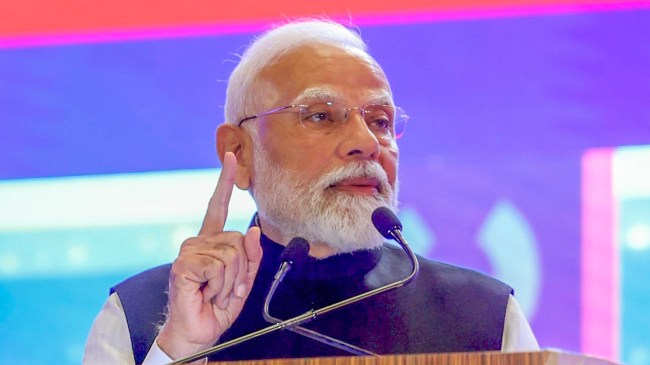 Modi 1.0 began by placing paramount importance on ensuring macroeconomic stability. (PTI)

Both Modi 1.0 and Modi 2.0 had clear strategies to deal with the economic challenges of the time. Whether they succeeded in resolving the issues facing the country is another matter now. The question, almost one year into this government’s third term, is: What is Modi 3.0’s economic strategy?
Modi 1.0 began by placing paramount importance on ensuring macroeconomic stability. The lessons from UPA’s mismanagement of the economy had been internalised. During the final years of UPA’s second term, the economy had lost momentum while inflation soared. The Centre’s fiscal health had also deteriorated sharply as it stepped up its support to the economy during the global financial crisis, and thereafter.

And while the deficit did decline subsequently, it remained elevated. Alongside, as savings fell, without a commensurate fall in investments, the current account deficit also widened significantly, raising concerns over financing.
There was also the worry that banks were masking the true extent of the bad loans in the system. Investor sentiment was also hit by the issue of retrospective taxation. And the Rupee came under pressure during the infamous taper tantrum when India, along with Brazil, Indonesia, South Africa and Turkey, was dubbed as one of the fragile five.
Modi 1.0 started by addressing these issues. In the Union Budget 2014-15, Finance Minister Arun Jaitley committed to bringing in a policy framework that would result in “higher growth, lower inflation, sustained level of external sector balance”. The budget unveiled a roadmap to bring down the deficit to 3 per cent of GDP by 2016-17.
It spoke of ushering in a “modern monetary policy framework” which resulted in putting in place an inflation targeting framework. It also sought to allay investor concerns, committing to “provide a stable and predictable taxation regime”. During this term, the government ushered in reforms such as the IBC and GST. It even tried to push through the contentious land acquisition bill. Alongside, the central bank took several steps to clean up bank balance sheets.
Modi 2.0 began with the realisation that, despite the steps it had taken in its first term, growth wasn’t picking up. That private investments continued to languish. Hoping to spur investments, in September 2019, the government cut the corporate tax to 22 per cent, and lowered the tax for new firms making fresh investments to 15 per cent. In the months thereafter, it also launched the production linked incentive scheme to further incentivise firms to invest in a range of sectors. And alongside, the government also increased its capital expenditure quite sharply in this term, hoping that it would crowd in private sector investments.
Modi 2.0 also had the difficult task of managing the economic fallout of the pandemic. It launched a host of measures to support the economy, including emergency steps such as the provision of free food, cash transfers and credit for small and medium-sized firms. As a consequence, its debt/deficits rose sharply, and despite consolidation in recent years, remain well above the levels prescribed by the Finance Commission.
But, despite the steps taken during both Modi 1.0 and Modi 2.0, the continuing weakness in the economy was apparent. The pain points were clear. One, the structural transformation of the economy had stalled. Rather than exiting agriculture, more workers were entering the sector. Two, the private investment cycle had not taken off despite the use of all fiscal levers.
Three, goods exports had stalled, while services exports held steady. This had implications for employment. Four, the jobs crisis, especially among the less skilled, was evident. Millions more were now self-employed. Fifth, real wages for large sections of the labour force had barely registered a rise. This impacted household consumption. Sixth, the combination of limited job creation and subdued wages meant that upward mobility was further restricted.
Modi 3.0 took charge against this backdrop. But, two budgets later, there is still no clear articulation of a strategy to address the issues plaguing the economy. Nor is there a clear roadmap of how the country will transition to upper middle income status and then to the high income category over the next two decades. There is little mention of the PLI scheme and considerable scepticism on the extent to which the income tax cuts can boost economic activity
Based on the pronouncements so far, there appear to be two broad areas that could possibly be the focus of Modi 3.0. One is trade where the government is hoping to stitch up agreements with the US, EU and the UK. However, considering that these talks have been going on for some time, the question is whether the agreements can be finally clinched. Another area could be deregulation. The Economic Survey had talked about it in great detail. The Union budget followed that up proposing to set up a high-level committee for regulatory reforms to enhance ease of doing business.
Deregulation is, however, not just an India-specific theme. In the US, Donald Trump has established the Department of Government Efficiency or DOGE to streamline government, with Elon Musk vowing to slash federal regulations. Employees across several agencies have already been fired. In the EU, the Draghi report on competitiveness talks in detail about the regulatory burden facing companies, especially the smaller firms, and how to reduce it. In Argentina, Javier Milei has taken a chainsaw to the government, and signed a decree to reduce the number of ministries from 19 to nine.
As per the Cato Institute, between December 2023 and December 7, 2024, there have been 672 regulatory reforms in the country. In Vietnam, the parliament has recently approved a plan for radically rehauling the government. As per reports, five ministries are being “abolished”, the bureaucracy is being “radically streamlined” and “thousands of jobs” are being cut as the government pursues “ambitious growth targets”. In comparison, in India, the high-level committee is expected to make recommendations “within a year”.
ishan.bakshi@expressindia.com

 Share
Share


