
The Organiser editorial on the Punjab National Bank fraud credits the Narendra Modi government for trying to resolve the mess in the financial sector. But it argues that without addressing the “root cause” of the fraudulent behaviour, which is the political patronage extended to defaulters, banks cannot remain bankable.
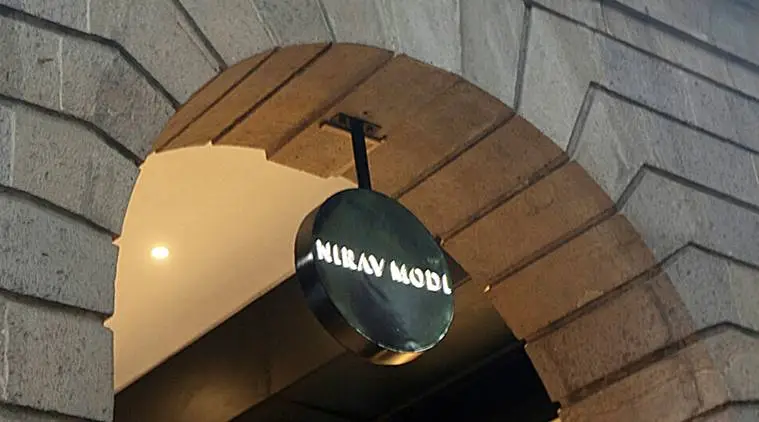
The editorial points out that on February 12, “the Reserve Bank of Bharat” came up with a policy framework for the resolution of stressed assets, especially for the public sector banks. “Amidst the execution of recapitalisation and introduction of the new Insolvency and Bankruptcy Code to ease out the stressed banking system, here comes the shocker of Punjab National Bank (PNB) fraud. Rahul Gandhi and his social media team did not miss the opportunity to target the present government as pro-rich and therefore letting off the big fishes. Going deep into the scam gives us a different picture about the mess in the banking system,” says the editorial. Billionaire diamond jeweller Nirav Modi along with his wife Ami, brother Nishal and maternal uncle Mehul Chinubhai Choksi are at the centre of this scam. The fraud came to light in January when the PNB filed an FIR with the CBI stating that fraudulent Letters of Undertaking (LoUs) worth Rs 280.7 crore were issued on January 16 and none of the due procedures was followed, involving foreign currency transactions worth millions of dollars.


Disorder in JNU
The Organiser cover story is on the strike in JNU. Titled “Politics of (Not) being in the classroom”, the report says, “In a residential university, which provides education through regular mode and not through correspondence, students are locking horns with the administration over the choice, or rather an alleged ‘right’ of not attending classes!”
According to the article, the JNU administration, through a circular, notified that a minimum of 75 per cent attendance in a course is mandatory for appearing in the end-semester examination for that course. “It is really surprising how JNU had not implemented the mandatory attendance ruling so far at any degree level, when the practice is already in place in other central universities like Banaras Hindu University (BHU), University of Delhi (DU), and University of Hyderabad (HCU). It has been claimed that the notification has displeased students and faculties alike,” says the cover story. It further adds that the JNU Student Union (JNUSU) has drawn the battlelines and is calling for a “rollback” and “boycott” of the mandatory attendance. The article says JNUSU organised protests outside the administration block in the campus on February 10 and students vandalised public property in the campus and assembled in a part of the campus, where large gatherings have been prohibited by the high court and the university. The article further claims that JNUSU, led by students associated with communist parties, has politicised the issue of mandatory attendance and was using the opportunity to promote disorder and indiscipline on campus.
A pat for police
Panchjanya has praised the UP police’s crackdown on criminals at a time the Yogi Adityanath government is facing criticism for the spike in police encounters. Panchjanya’s report says that in the 11 months of the Adityanath government, the police has gunned down 38 notorious criminals and more than 2,000 wanted criminals were arrested in around 1,142 encounters. “Because of these encounters, the common public is now feeling safe and criminals are scared and are preferring to stay in jails instead of applying for ‘bail’,” according to the report. Law and order had collapsed under the previous Akhilesh Yadav government. The crime graph was rising, but the SP regime chose to ignore it. The report claims that a majority of police encounters has taken place in western UP and the Meerut zone tops the list with more than 362 encounters, in which 19 “criminals” have been killed.
Compiled by Lalmani Verma


