
Opinion Jafar Panahi complicates the revenge tale in his latest film, ‘It Was Just An Accident’. It turned out to be one of the best films of the year
An award season favourite and his first film since his 2022 imprisonment, the film offers no easy answers or catharsis, but remains resolutely humane
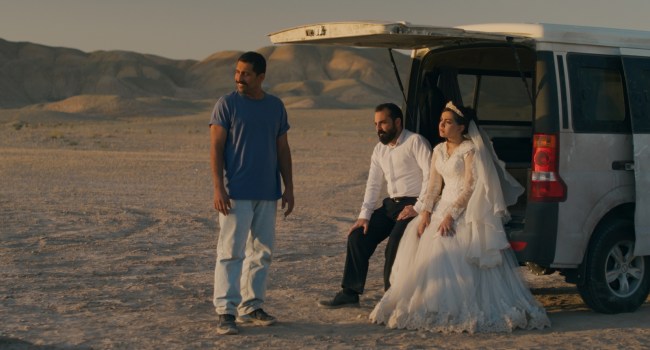 'It Was Just An Accident', which draws from Panahi’s experience of being imprisoned and interrogated while being blindfolded, was shot in Tehran discreetly with a small crew, non-professional actors and a modest budget.


When I met the widely-admired Iranian director Jafar Panahi at a reception ahead of the screening of his latest feature, It Was Just an Accident, at the Toronto International Film Festival in September, he made a startling admission: That upon revisiting the film, he had found himself unhappy with certain things in it. This, incidentally, is a critically acclaimed film that won the Palme d’Or at the 2025 Cannes International Film Festival and, backed by Neon studio, is contending for other honours, including at the upcoming Academy Awards. He may have said it in jest or out of a sense of humility, but upon reflection, such a statement from the contemporary master should not have been surprising.
Basking in accolades has never been Panahi’s style. Notwithstanding his years of hardship — including being banned from filmmaking and serving two prison terms — he has always been uncompromising in his vision. Under Iran’s strict censorship laws, he’s long battled to retain his authentic cinematic voice, evading state authority by filming clandestinely. He famously shot Taxi in his own vehicle in 2015 and with It Was Just An Accident, he refused to comply with the rule of getting the government’s approval for a script before filming.

It Was Just An Accident, which draws from Panahi’s experience of being imprisoned and interrogated while being blindfolded, was shot in Tehran discreetly with a small crew, non-professional actors and a modest budget. The film opens with a man, who is travelling at night with his pregnant wife and daughter, facing car trouble. While looking for a mechanic, the sound his prosthetic leg makes as he shuffles around, and his voice, trigger in the protagonist Vahid memories of being tortured in prison.
Later, a furious Vahid kidnaps the man, blindfolds and locks him in his van. He suspects that this man is his tormentor, but he is not entirely sure. Soon, a group of former prisoners, who were subjected to inhuman treatment and threats by the same prison supervisor, come together. At various points, they recount the torture they experienced and while Panahi never resorts to showing violence on screen, their harrowing stories make the audience shudder.
What makes the movie a masterpiece is Panahi’s subversion of the revenge story. “Art in its nature does not allow one to write a prescription, a formula that fits all. And we’re not able to say that everyone has to act in a certain way,” Panahi said this year during a special virtual interaction. At a time when films like Chhaava, Dhurandhar and Pushpa 2: The Rule embrace a cocktail of masculinity, violence and spectacle to spin epic tales of vengeance, It Was Just An Accident offers another path.
The traumatised group of former prisoners in the film is confronted with the dilemma of whether or not to exact revenge against their tormentor. The film offers no easy answers or catharsis; Panahi’s characters grapple with a moral dilemma, debating whether they should continue with the cycle of violence. His choices show how Panahi, who calls himself a socially-engaged filmmaker”, hews close to “a sense of realism and to real life” while being resolutely humane.
This is an approach with universal resonance; It Was Just An Accident recently secured four Golden Globe nominations for Best Motion Picture (Drama), Best Director, Best Screenplay, and Best Non-English Language Film. It is also a frontrunner in the Best Picture and Best International Feature Film categories at the Oscars. It is not by accident that many are calling the movie Panahi’s “bravest” work yet.
The writer is associate editor, The Indian Express. alaka.sahani@expressindia.com

 Share
Share


