
Opinion For the Indian economy, a season of mixed tidings
On revenue, inflation, there is room for optimism this year. But concerns remain
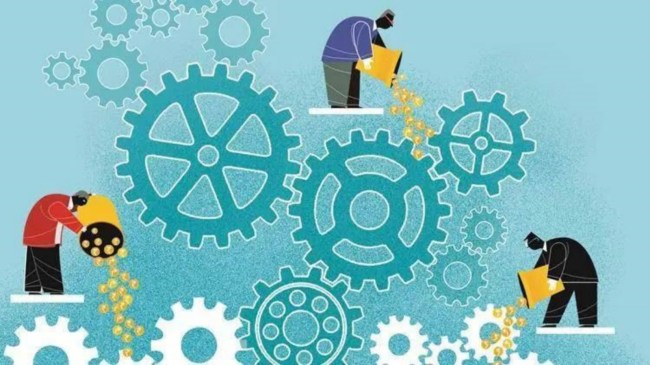 The hits and misses under various heads in FY25 may have some bearing on the assessment of the FY26 targets.


The fiscal health of the Centre and states is a key cog of the macro picture. This article analyses the Government of India’s (GoI’s) fiscal trends for FY2025 and what they augur for the current fiscal and the medium term.
In absolute terms, the GoI’s fiscal deficit in FY25 marginally exceeded its Revised Estimate (RE) of Rs 15.7 trillion by Rs 77 billion, as per provisional data from the CGA. This was led by a welcome overshooting in capex, with a back-ended surge seen in Q4. A less palatable miss on the receipts side was, however, largely offset by considerable savings of Rs 0.9 trillion in revenue expenditure in the fiscal.

The provisional estimate of the nominal GDP for FY25 printed at around 2 per cent higher than the First Advance Estimate (FAE) for the fiscal that was used at the time of the Union budget. This meant that the fiscal deficit was contained at 4.8 per cent of GDP, in line with the target. Interestingly, the revenue deficit was curtailed at Rs 5.7 trillion lower than RE of Rs 6.1 trillion. As a proportion of GDP, this amounted to a 17-year low of 1.7 per cent vs 1.9 per cent included in the FY25 RE, a welcome development.
The hits and misses under various heads in FY25 may have some bearing on the assessment of the FY26 targets. For instance, the Rs 0.6 trillion shortfall in gross tax revenues in the FY25 provisionals vis-à-vis the RE has pushed up the required growth rate for this head in FY26 to 12.5 per cent from an already optimistic 10.8 per cent earlier. However, there is an additional cushion on the receipts side of around Rs 0.4 trillion on account of the higher-than-budgeted RBI dividend transfer.
Additionally, as per CGA data for April, miscellaneous capital receipts amounted to as much as 46 per cent of the FY26 BE of Rs 470 billion, as against nil in the year-ago month. This is an unusually high proportion to be recorded in the first month of the fiscal and gives us confidence that its target is unlikely to be missed. On the expenditure side, the required growth to meet the FY26 BE for revex is now higher than assumed in the budget; for capex, it is lower. For this year, both the composition and the timing of expenditure will be key. An early kick-off to spending will provide a buffer against the uncertainties wrought by the tariff issues.
The upward revision in the FY25 nominal GDP number also augurs well for meeting the deficit- and debt-to-GDP targets for FY26. Despite a relatively lower projected nominal growth of 9 per cent in FY26 (ICRA’s forecast) vis-à-vis the budgeted levels of 10.1 per cent, the fiscal deficit can be contained at 4.4 per cent in FY26, while accommodating a marginal fiscal slippage, given the larger base. The fiscal buffer in FY26 could be used to push up the capex, which has begun on a strong note, surging by as much as 61 per cent to Rs 1.6 trillion in April 2025, well above the average monthly required run-rate of Rs 0.9 trillion for the fiscal. Capex needs to grow by 0.9 per cent in the remaining 11 months to meet the FY2026 budget target.
Given these buffers, the GoI could push up capex by at least Rs 0.8 trillion in FY2026 relative to the BE, which would take the headline figure to nearly Rs 12.0 trillion, implying a higher growth.
Some major policy issues are looming on the horizon, which would affect the Centre’s and states’ finances, and their fiscal relations. First, the Sixteenth Finance Commission is due to submit its report later this year, and its recommendations will impact both central and state finances over the next five years. Will the recent conflict and need for geopolitical readiness lead to higher pre-emptive defence spending? If so, this may leave less money for other priorities. The Pay Commission award and its timing will affect the Centre’s finances directly and some states may follow suit. Lastly, the GST compensation cess is shortly due to cease in its current avatar and how it is reimagined will impact Centre and state revenues.
The writer is chief economist and head, Research & Outreach, ICRA

 Share
Share


