
Opinion Fifth column: A vital year
The most worrying failure of Modi’s first two years as PM has been the absence of job creation. So possibly, the most important thing he can do this year is find out why more jobs are not being created.
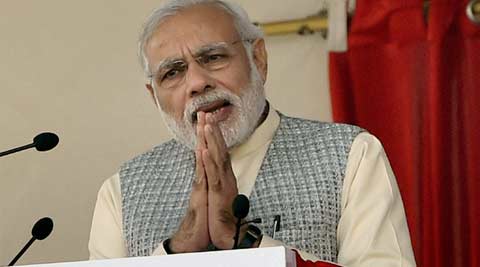


 Prime Minister Narendra Modi. (PTI Photo)
Now begins what will probably be the most important year of Narendra Modi’s time as Prime Minister. As someone who is sneered at on Twitter as a ‘Modi bhakt’, let me admit that I do want him to succeed. If he does, India could finally be on her way to winning her grim battle against poverty, disease, illiteracy, ignorance and filth. The country Modi inherited was defined by these things. These were India’s defining traits, because instead of real democracy we have had a debilitating form of democratic feudalism. Modi changed this and at least it can be said of him that he gives more importance to serving India than serving his family. This is a good beginning. But now it is time for him to rectify mistakes he made in the past two years that lost him the support of his most ardent supporters and gave his enemies ammunition.
Rectifying these mistakes is vital because this is also the year when he has to stop blaming governments past for why there are still no signs of real ‘parivartan’. It is true that vital, new laws have been blocked in Parliament by Madonna and Child, but you do not need Parliament to make administrative reforms so why have these not happened? Could it be because the Prime Minister has vested too much faith in the bureaucracy? Based on whispers I have heard in political circles, I believe that he has been seduced by the wiles of high officials in the Government of India, and in this department they are masters. While exhibiting utmost servility they are able to prevent change from happening no matter how determined the intentions of their ministers. If a minister tries to do something new officialdom always finds a way to stop him. Sadly there are signs that high officials have prevented Modi from fulfilling his promise of ‘minimum government, maximum governance.’

If the Prime Minister wants change he should use the NITI Aayog to draw up a plan for administrative reform. It could also suggest which ministries need immediate abolition. Officials made redundant can be given the job of ensuring that the government’s programmes for financial inclusion and rural infrastructure are going ahead at full speed. Since improved healthcare is impossible without improved public hygiene, they can also be useful in making sure that the Swachh Bharat campaign really works. So far there is tokenism and tokenism alone. There is no point in building toilets if they do not work and there is no point in getting celebrities to wander about with brooms in their hands unless there are also serious efforts to modernise urban waste disposal.
Education needs as much attention as public health. Indian schools and colleges are among the worst in the world. They will not improve unless the license raj that permits officials to interfere and obstruct is ended. The Chief Minister of Delhi has proudly removed management quotas in nursery schools, but seems not to have noticed that if there were enough schools in the first place there would be no need for quotas. School education is a state subject but higher education comes directly under the Government of India and can only improve when a real education minister is tasked with making a new education policy that will curb officialdom. We do not need a University Grants Commission, so why does it exist? We need millions of technical colleges to come up across the country but regulators ensure that land and permissions go to politicians and those able to pull hefty strings.
This was the socialist way. It served largely to benefit politicians and bureaucrats whose children almost never use the public services they provide. Most public services are appalling but government schools and hospitals are truly primitive. This must change for the Prime Minister’s mission called ‘skill India’ to succeed. You cannot teach skills at all to children who leave school without being able to read a storybook.
The most worrying failure of Modi’s first two years as Prime Minister has been the absence of job creation. So possibly, the most important thing he can do this year is find out why more jobs are not being created.
India may be the fastest growing economy in the world, as our ministers like to boast, but ground realities tell another story. By coincidence before writing this column I met a youth from Porbandar who was trying to go to Saudi Arabia to make the money required to return and start his own business. When I asked why he was unable to get a bank loan under the Prime Minister’s ‘start-ups’ programme, he said, “People like me don’t get bank loans. I come from a poor family. Where can I get the collateral they demand?” In 2016, hope will die if change does not happen.
@ tavleen_singh
 Share
Share


