
Opinion Britain on the brink
Whether Scotland votes for independence or stays with the union, the UK will never be the same.


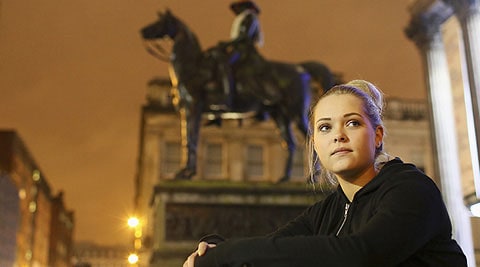 Scottish First Minister Alex Salmond has sold freedom as a lollipop, a sweet to be enjoyed on its own merit.
It’s the passionate poetry of freedom versus the cold prose of facts, the sweetness of “yes” against a churlish “no”. On September 18, more than 40 lakh Scottish voters go to a poll on whether to leave the United Kingdom and become an independent nation. The stakes for both are existential. A poll of opinion polls on September 10 put the break-up vote at 48 per cent and unity vote at 52 per cent. But on the ground, the razor’s edge is sharper.
Blame the existence of the referendum on glorious British democracy and a little bit of smugness. Self-rule powers have been devolved to Scotland for decades, giving it a parliament. Yet the Scots voted the separatist Scottish National Party (SNP) to power in 2011. This implied that a sizeable number of people in Scotland wanted to leave Britain, and British Prime Minister David Cameron had little choice but to give them a clear vote. Cameron could go down in history as the PM who presided over the end of the 300-year-old union, but when the referendum was announced in late 2012, everyone thought it was a good idea. Why would they leave, anyway?

But with the “yes” campaign gaining ground, the unthinkable might occur, and it has to be asked: What happens if Scotland votes “yes”? Shock and horror and casualties all around. A huge constitutional logjam lasting years. Actual independence would come only in 2016; in between, there is the British general election in May 2015, in which Scots would still vote and send 59 members of parliament to London. In the current parliament, 41 are Labour MPs and only one is from the ruling Conservative Party. If Labour comes to power, its government could fall in May 2016, when Scottish MPs leave, forcing new polls. More crucially, would this lame duck government have the legitimacy to negotiate the terms of separation? If not, who would? In any case, Cameron’s career is probably over, as perhaps of Labour leader Ed Miliband.
SNP leader and Scottish First Minister Alex Salmond has all the romance of a freedom fighter. He says he will “keep” the queen and the pound sterling, and never hassles himself with facts. Well, the queen looks unlikely and the pound impossible. There will be no currency union with England and a one-sided use of the pound means “free” Scotland will have no freedom to run its monetary policy and, indeed, its economy. Then there is the certainty of massive flight of capital and business to England. Welfare and borrowing costs will be crippling, and a future like Greece or Spain in deep debt looms.
Also, once Scotland leaves the UK, entry into the EU is not automatic and would take years, if at all. It also cannot be part of Nato, as the resolution to become nuclear-free means the new Scotland will be a liability. With a mere 50 lakh people, Scotland would be in the same league as Slovakia and Croatia, but without the lovely sunshine. While adrift, it will still need to build every state institution from scratch, which will cost billions.
So why do they want to leave? It’s about history and kicking the Tories. Salmond has sold freedom as a lollipop, a sweet to be enjoyed on its own merit. He represents the socialist heart of Scotland that has always dreamed of freedom from England, the land of Tories who practise the nasty capitalism of private healthcare and inherited wealth. Bile was brewing from Margaret Thatcher’s era in the 1980s and the “betrayal” of socialist values by Labour’s Tony Blair pushed the Scots to the edge. When the Tories came to power in 2010, many in Scotland just snapped.
Even if it’s a “no”, Britain lives but not as we know it. More powers in areas of taxation and spending are already coming Scotland’s way if it stays. But other nations within the UK — especially England, which has over 80 per cent of the six crore population — are bound to ask for “freedom” from Scotland. In the current system, Scottish MPs vote on English legislation but not the other way round. That and a lot more has to change. A loose union turns looser.
bhawesh.mishra@expressindia.com
 Share
Share


