Journalism of Courage
 6 min read



We8217;re poor. We8217;re illiterate. We8217;re still traditional. Too many religions, too many languages, too many ethnicities. nbsp;What do we have that the extremists repeatedly make us the target of their terrorism? nbsp;
Those very things 8212; poverty, illiteracy, tradition, multiple religions, ethnicities and languages. Not because they are a fertile breeding ground for radical recruits but because India is finding workable, affordable and replicable solutions which will help it overcome the same problems. Those solutions are being emulated by emerging societies across the world, giving them hope for their own futures. That is why India8217;s unexpected rise is threatening to those forces that work in the darkness of despair. nbsp;
Socially, politically and economically, India sits between two extremes: the West andnbsp;China. The models of the western world are too developed to be easily adapted 8212; 50 years of aid has not been effective. China is autocratic, its top-down growth delivered by an appointed, disciplined elite to an obedient population. Neither condition is universal. India8217;s is. 8220;India is, in a sense, the crucible of the world,8221; says Prableen Sabhaney of Fabindia. Under the umbrella of India, in varying stages of development, is the rest of the world 8212; south Asia, where it is the mother culture, but also Africa, some nations of the Middle East, south and central America, central and south east Asia. These are regions rich in assets, and human capital with the potential and now the desire, to develop. They all think: If India can do it, so can they.nbsp;
India is showing how a developing country can transform itself 8212; from the bottom up. Politically, it is democratic, pluralistic, inclusive. Its democracy is chaotic and imperfect, but it functions and it is moving forward. What counts is the vote, first and foremost. Accountability8230; that8217;ll come later, at some point when democracy has produced enough social and economic equality. But that vote is empowering, it creates upward mobility and a huge constituency of the poor and underprivileged for democracy that gives it staying power. nbsp;
The executing machinery of this democracy is often faulty, but understands the constraints within which it operates. The election commission knows how to access and include people from the remotest corners of the country and overcome the boundaries of tradition 8212; a case study that Afghanistan could use. The judiciary is overburdened and inefficient but also activist when necessary 8212; Pakistan has seen that. The press is free and self-serving but enough times the watchdog it needs to be; the parliament is obstructionist but vital. Rather than spill blood, Indians have learned to use electoral politics and affirmative action to negotiate their way up and out of the centuries-old repressive caste system that left craters of inequality. nbsp;
It left India8217;s elite, the Brahmins, excluded from the political and administrative system, so they turned to entrepreneurship from their professional degrees 8212; mostly engineering. That8217;s how information technology arrived in India, like the new avatar of Vishnu, bestowing upon India its transformative powers of a virtually workable existence. Sure, all developed countries have software, cellular and satellite technology. But resource-poor India used it differently. Software services were used as the engine of exports. Cellphones weren8217;t just about communication but also about affordability.nbsp; And affordable, home-built satellites which brought in western programming, transported ordinary Indians into the drawing rooms of the world and forever changed the aspirations of generations of young Indians. They all want to emulate the success of those Brahmin engineers, and education 8212; which gives them freedom from poverty 8212; has become their priority.nbsp; nbsp;
Now India is known as a country whose brain power has 8216;ingenuity8217; and the unique capability of 8216;frugal engineering.8217; It also has model corporations like the Tata Group, which have a charitable trust as is majority shareholder, and understands the true meaning of 8216;stakeholders8217; and 8216;shareholders.8217; Companies like Fabindia have shown that artisanal collectives can compete with the mass production of China, and still keep India8217;s delicate social balance intact. The economic success of a poor, democratic country is enough to threaten the terrorist way of life. But what really gives them sleepless nights is India8217;s accessible dreams. It is possible in today8217;s India, to go from rags to riches in one generation. There8217;s confidence, there8217;s education, there8217;s increasing equality. nbsp;
This is fuelled by the exuberance of India8217;s entertainment industry. Bollywood still produces mostly musical family fare but its stories have morals and are a handbook on how traditional, multi-religious and ethnic societies traverse the thorny path into the modern era without losing their identities. When terrorism strikes, Bollywood will show Muslims to always be the most loyal of friends. When traditionalists revolt against western cultural domination, Bollywood will tell the tale of a girl who lives in America and wears a short skirt, but can still fall in love with a son-of-the-soil and be a devoted wife in small town India. Television also unites this diverse India: talent from Kashmir to Meghalaya to Kerala dream of becoming the
Indian Idol. nbsp;
The Taj and the Oberoi symbolized this India of accessible dreams. Accessible to Indians, but also to nations like India 8212; poor, traditional societies, some re-emerging from the dark years of colonialism or misguided socialist policies or autocratic rule, looking for affordable, democratic, socially acceptable development models which will give them hope for a bright future. Exactly what the terrorists don8217;t want.
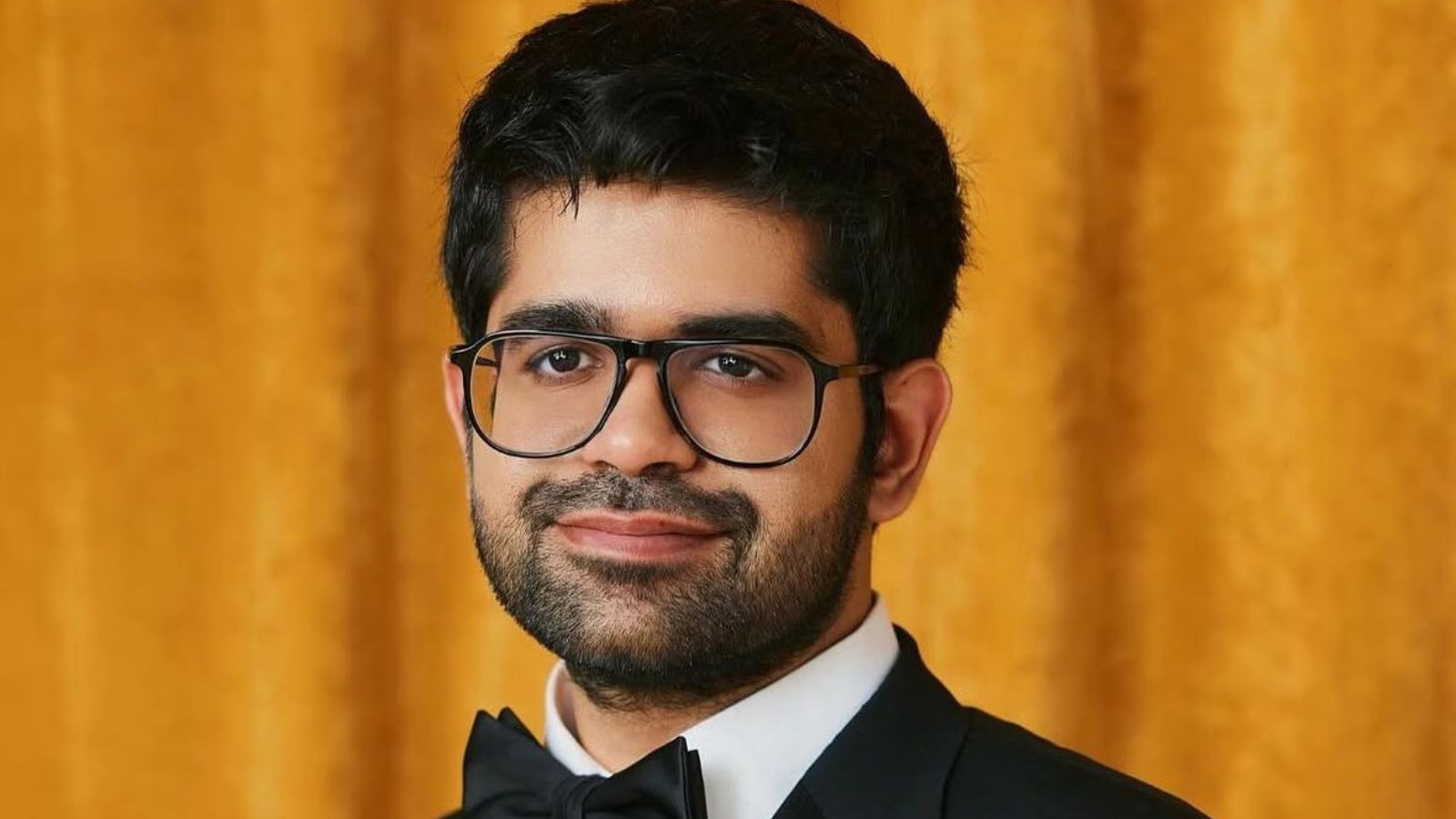
The writer is India bureau chief, 8216;Businessweek8217;