Journalism of Courage
 3 min read


Prime Minister Manmohan Singh said on Saturday that the three organs of the State Legislature,Judiciary and Executive must respect the doctrine of separation of powers and not try to exceed their limit.
It is also commonly agreed that all the three organs of the State are bound by and subject to the provisions of the Constitution,which demarcates their respective powers,jurisdictions,responsibilities and relationship with one another. It is to be assumed that neither of the three organs of the State,whether it is the judiciary or the executive or the legislature,would exceed its powers as laid down in the Constitution. Even though their jurisdictions may be separated and demarcated,it is essential that all institutions work in harmony and in tandem to maximise the public good, Singh said.
He was addressing the Golden Jubilee National Conference of the Bar Association of India BAI. The PM also called for joint efforts by the government,the judiciary and lawyers to check the rising cost of litigation. It has been said that justice delayed is justice denied. It is important that concerted cooperative efforts are made by the government,the judiciary and the bar association to deal with the mounting arrears in our courts and the growing cost of litigation, he said.
He said that equality before law couldnt become a living reality if ordinary citizens didnt have access to justice at affordable cost. The plight of the large number of undertrial prisoners should move the machinery of justice to speedy corrective measures as part of the process of reforming and improving the quality of governance in our country, he said.
CJI K G Balakrishnan,who demits office next week,said the judiciary had played an important role in bringing in some of the landmark legislations passed by Parliament in recent years. He said it was due to intervention by courts that government had enacted legislation for free and compulsory education and the Right to Information Act.
In recent years,the enactment of the RTI,the Right of Children to Free and Compulsory Education Act are some prominent examples of far-reaching legislations whose origin can be attributed to judicial interventions in some part, he said.
Justice H S Kapadia,the CJI-designate said,the fundamental rights of the citizens and the responsibility of the government became meaningful only when they became justiciable and at this juncture the superior courts should understand the consequences of their judgements.

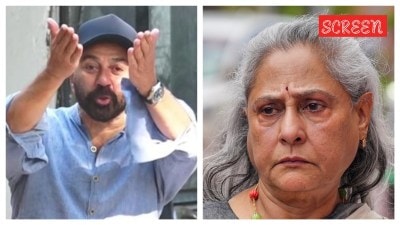
Days before Dharmendra breathed his last, a video surfaced in which his elder son Sunny Deol was seen folding hands and scolding the paparazzi for capturing the proceedings inside their Juhu residence. “Aapke ghar mein maa-baap, bachche hain? Sharam nahi aati? Ch**iyo ki tarah video bana rahe ho,” he said. That prompted a lot of backlash, even from members of the film industry.