


Tags:


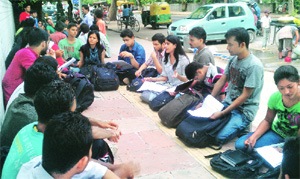
There are few suitable rehearsal spaces for theatre groups in the city
No comments, says a veteran actor gruffly,when asked where his troupe rehearses for plays. The director of another group is willing to answer only off the record. A government officer who acts with him has pulled strings to get them a hall to practise in,three evenings a week,he confides. Yet another director confesses to having used his contacts to hire a school auditorium at a nominal rate,and adds,Dont write about it. An innocuous exploration of theatre rehearsal spaces in the city seems like a trip through a shadowy terrain.


On every groups wish list is a rehearsal studio with proper acoustics,lighting facility and clean toilets. Instead,stage professionals are full of stories about practising in Lodhi Garden,Central Park,pavements,badminton courts and even construction sites. Until the Metro construction began in Mandi House,we even used the roundabout parks to rehearse,with actors trying to drown out the roar of rush hour traffic with forceful dialogues, says Arvind Gaur of Asmita Theatre Group. The result,he adds,can be seen in public performances of various theatre groups several actors cannot adjust to the sudden shift from an open-air rehearsal space to a closed auditorium. A badly rehearsed play will never look good on stage, he adds. On most days,Asmita rents a space for its rehearsals.
Can the lack of suitable rehearsal spaces also be blamed for the increase in plays with few actors? Sarita Vohra of Livingroom Theatre thinks so. Her own recent plays,Kathpalia House and Aur Hum Do,have had between two and five people,enough to accommodate into my living room, she adds. After tirelessly and fruitlessly searching for a space that was air-conditioned,had parking space and was affordable,Vohra has decided to construct an amphitheatre on her terrace of her house in South Delhi. At least,well be able to use it from September to March,when the sun isnt too strong, she says.
Meanwhile,the Ministry of Culture has been flooded with applications for the Studio Theater scheme,in which the government partly funds small spaces,says BP Bhukar,undersecretary of the department. It is a Rs 4 crore scheme. Many groups are disqualified because their applications are incomplete, he adds. Theatre groups,however,say that even with government funding,they would not be able to afford the exorbitant real estate rates even for a small studio.
Alam prefers to focus on the silver lining. We decided to look at the surrounding disturbances as opportunities to increase our concentration. So,even when there are phones ringing and there is other activity around us during rehearsal,weve become adept at shutting these out and staying firmly in character, he says.


