2 min read

Journalism of Courage



The art of qawwali unfolds in a day-long event today.
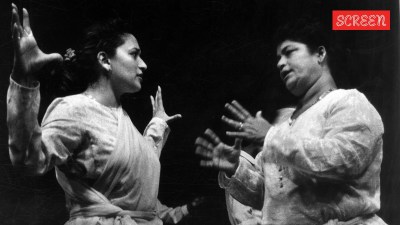
The hypnotic vocal cadenza and orchestral webs of Ustad Nusrat Fateh Ali Khans qawwali has always been an act of worship. Traditionally sung at the shrines of saints,Khan would sing compositions such as Allah Hoo and Aafreen,leading his audience into a trance. The others such as Maqbool Sabri and Warsi Brothers also made the genre popular. But whenever I would dance to qawwali,I was questioned as a classical dancer. Qawwali was seen as a genre that was non-serious. There wasnt any proper documentation of qawwali,although it has links with dhrupad,khayal and uses some of the most intelligent poetry, says sufi kathak exponent Manjari Chaturvedi,who pored over whatever was available,including a book by London-based Regula Qureshi,to organise Understanding Qawwali.
Sufi Kathak Foundation in collaboration with Indian Council of Cultural Relations and Routes2Roots present this day-long event,which will feature multiple programmes on the art form. There will be a panel discussion on marginal qawwali musicians,the origins of qawwali and its present state in India. The panelists include dhrupad singer Wasifuddin Dagar,singer and songwriter Madan Gopal,musician Dhruv Sangari and Delhi University professor Najma Parveen. The event will also feature discussions with and performances by Wajahat Hussain Badayuni,grand nephew of the illustrious Zafar Hussain Badayuni,and Rizwan and Muazzam,nephews of Khan. Two documentaries on the lives of qawwals will also be screened.
This is information that you will not find on the internet. There is no denying the power of qawwali the inherent style of which took so many to the path of spirituality. But there is a parallel version of it,this noir style used around,which is a little disturbing and dilutes the whole form. The effort is to talk about qawwali and create awareness so that the beauty of the genre is not lost because of ignorance, says Chaturvedi.
At IIC,from 10 am onwards. Contact 24619431