


Tags:


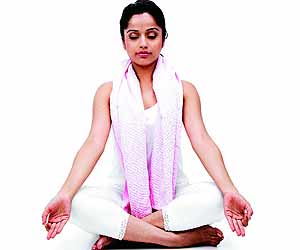
It can help you clear your head,but meditation gone wrong could give you more stress than you can handle
Fools hesitate,the wise meditate. Its said to be the easiest route to spirituality and the key to self-knowledge. And so,Kolkata-based publishing professional Diya Nagpal stocked up on books on meditation and immersed herself in them. Every morning,I would force myself into padmasana or the lotus position,and try hard to shut my thoughts out. I would set aside an hour to meditate but could never manage more than 10 minutes. By the end of the week,I was left with a bad pain from twisting my legs, says the 35-year-old.
The blood circulation in her legs was hampered and if Nagpal hadnt quit when she did,there could have been a long-term risk of gout or arthritis, says Delhi-based yoga guru Suneel Singh.
Meditation,he says,is surrounded by myths,and among these is the belief that one must always sit in padmasana. One can sit in the standard cross-legged position called sukhasana. Meditation can also be done while sitting normally on a chair or even lying down, he says.


Singh says that he insists on warm-up exercises like hip rotation before meditation sessions and has students regularly massage mustard oil on their joints. It is also important to alter the position of legs while sitting. If its right leg up one day,it should be the left leg the next day, says Singh,who has been teaching yoga for the last 22 years and has conducted workshops across the country.
The yoga guru adds that meditation techniques like nasika graha and drishti mudra,in which people focus on the tip of their nose or between the eyebrows during meditation,is not recommended for those suffering from eye strain,cataract or glaucoma.
Shubhra Pandey,a 23-year-old architect from Delhi,recalls how she suffered from a stiff back after meditation. I had been told that meditation involved keeping the spine straight. When I consulted an expert that,I learnt that I could use a wall or a back rest to support my back, she says.
Patel adds that meditation is also not entirely about visualising a particular colour or focusing on one object. The sahaj samadhi meditation that she follows and teaches is about resting deeply within the self yet being aware and alert. It is a state of rest even deeper than sleep and 20 minutes of meditation is equivalent to several hours of sleep, she says.
In the silence of the mind,meditation also throws up unpleasant thoughts. While Patel advises that one should allow these to float away like clouds,Singh says that dark memories disturb the internal equilibrium. During meditation,a lot of thoughts bubble to the surface one after another. These are suppressed fears and anxieties,sometimes buried in the mind for decades. Ive often seen elderly people become agitated because their thoughts are about death,loneliness,helplessness and fear,that sometimes reduces them to tears. This is where a guru steps in and guides them to tranquility, says Singh. Meditation is here to stay as an antidote to lifestyle stress. But,as in all cures,expert advice scores higher than self-medication.


