


Tags:


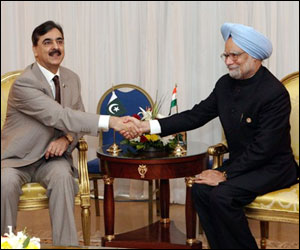
A reference to threats in Balochistan in the joint Indo-Pak statement,issued in Egypt today,marks a significant departure from Indias long-held position on the ethnic unrest in Pakistans largest state even as Prime Minister Manmohan Singh tried to justify the reference by saying New Delhi has nothing to hide since its policy in the region was an open book.
Seasoned diplomats expressed surprise and concern over the inclusion of Balochistan in the statement,the first time that the issue has found a mention in any joint statement issued by the two countries.


The fact that terrorism will not come in the way of talks is contrary to assurances given by the government to Parliament including the January 6,2009 statement by the Prime Minister. This is a complete victory of Pakistans diplomatic establishment, he said.
Former Foreign Secretary Lalit Mansingh was equally critical of the Balochistan reference. Pakistan,perhaps,will be able to score some brownie points on this from its domestic audience. But this is an absolutely absurd theory that India has any involvement in the terror activities in Balochistan, he said.
The joint statement talked about an agreement over sharing real time,credible and actionable information on terrorist threats. It went on to say that Gilani mentioned that Pakistan has some information on threats in Balochistan and other areas.
Observers are of the opinion that what is implied in the inclusion of the term threats in Pakistan is that somehow those threats are linked to India,a proposition that the Indian leadership should have rejected comprehensively,in the same manner it has done all these years.
Pakistan has regularly blamed India for fomenting trouble in Balochistan,often using this argument to counter New Delhis assertions about Pakistani support to terrorists operating in India. So far,India had vehemently opposed Pakistans repeated attempts to seek parity on this count and stoutly denied any attempts to link it with the largely ethnic unrest in Pakistans western region bordering Iran and Afghanistan. This,observers say,has now been watered down and opens up the space for Pakistan to rake up this issue in future bilateral talks.
Manmohan Singh,however,said India had nothing to hide.
We have nothing to be afraid of. Our conduct there Balochistan is like an open book, he told reporters when questioned about the reference in the joint statement.
The Opposition BJP criticised the de-linking of action on terrorism from the composite dialogue process,describing it as contrary to the agreement reached between Atal Behari Vajpayee and General Pervez Musharraf in 2004.
This is a disturbing development. No meaningful dialogue and normal relationship would be possible with Pakistan without the resolution of the issue of terrorism against India emanating from the soil of Pakistan, BJP spokesperson Ravi Shankar Prasad said. Prasad said the joint statement was a departure from what India had been publicly saying till just a fortnight ago. Why this tectonic shift in position? Hardly a fortnight ago,the Prime Minister had told Pakistani President that the territory of Pakistan must not be allowed to be used for terrorism against India. How come this sudden change has been brought about? he asked.


