Journalism of Courage
 2 min read


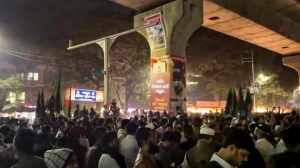
With the death toll climbing from violence unleashed by supporters of the Jamaat-e-Islami following Thursdays verdict,sentencing Jamaat vice-president Delwar Hossain Sayedee to death,Bangladeshs deep divisions appear to have taken the country hostage,if not by surprise. The surprise had come earlier first,when the process begun by Sheikh Hasinas government,to try people accused of war crimes in 1971,came under international censure and was nearly derailed by domestic upheaval. And then,when thousands of students and Bangladeshis from all walks of life poured into Dhakas Shahbag Square,demanding that Jamaat leader Abdul Quader Mollah be given capital punishment instead of a life sentence.
The fresh violence is evidence of the continuing war for Bangladeshs political soul. The struggle is as much for the states cultural-political identity as for a peoples definition of who they are and what they want to be. This is framed by the religious-secular divide. Locked therein are two competing narratives of Bangladesh that of the majority,which fought to liberate the country and preserve its linguistic-cultural identity,and that of the Jamaat,whose older members were Razakars,or collaborators. Not only was the Jamaat opposed to Bangladeshs independence,but the Razakars allegedly killed,raped and plundered Bangladeshis along with the Pakistan army. These forces used the religious space to disrupt Bangladeshs democratic evolution as envisioned in 1971.
Today,these forces are fighting back,and their desperation was seen in the murder last month of Ahmed Rajib Haider,a blogger and organiser of the Shahbag protests. The imperative now is to guarantee the safety of citizens,and to secure the country for history. As far as India is concerned,it must stand by the progressive forces in Dhaka,like Hasina,who has transformed Indo-Bangla relations and reduced one worry for New Delhi about its volatile neighbourhood. As President Pranab Mukherjee prepares to visit Dhaka,Delhi must work with urgency to deliver on Teesta water-sharing and the land boundary agreement. That is the best help India can provide its friends in Bangladesh in this turbulent moment.