Journalism of Courage
 3 min read


The Patience Stone
Atiq Rahimi
Chatto amp; Windus Pages: 136
Rs 449
At the very beginning of Doris Lessings The Golden Notebook,the novels heroine says,The point is,as far as I can see,everything is cracking up. Its a sentiment that would have been wholly subscribed to by the woman at the centre of Atiq Rahimis The Patience Stone. Rahimis novel is completely dissimilar to Lessings; nevertheless,he,too,aims to capture female experience,one from a totally different world than that of London in the Fifties.
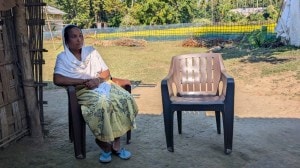
The action of The Patience Stone takes place largely in one room of a small house in a village in faction-ridden Afghanistan. It centres on the monologue the woman has with her wounded,comatose husband. In this sense,it is more like a one-act play. The man remains motionless,lacking the awareness and will to even brush a fly away from his face; the woman goes through the repetitive routines of counting prayer beads,washing him,adjusting his drip bag and applying eye drops to his still,staring eyes. The space between them is filled with words: words that shes lacked the confidence to utter before,but now pour out undistorted. As she says,Weve been married ten years . And its only these last three weeks that Im sharing something with you.
She starts to tell her immobile auditor what she really thinks about their relationship,her views on the Mullah outside,her hopes and her childhood memories. Halfway through,it occurs to her that her husband is now a version of the mythical patience stone,an object you tell all your problems to,all your struggles,all your woe,all your pain . And the stone listens,absorbing all your words,all your secrets,until one fine day it explodes. With this in mind,she continues: I am going to tell you everything,my sang-e-sabur. Everything. Until I set myself free from my pain and my suffering. And on she speaks,revealing ill-treatment,slights,wounds and,finally,secrets that she has kept from him so far.
Interspersed with the womans words are frequent reminders of the word outside: gunshots,explosions and jihadists who enter,seeking to impose their will. This juxtaposition is handled very well: as readers,we remain in that small room for most of the time,but were made only too aware of its location and context. Rahimis prose translated from the French by Polly McLean is unvarnished and spare,yet occasionally becomes choppy,as though mimicking the action of the husbands intakes of breath. When repeated too often,this comes across as an affectation.
The novelists anger at the state of subjugated women in Afghanistan is evident in the contempt he makes his protagonist feel for the men in her life. Importantly,she is not a stereotypical character,but has her flesh-and-blood,passive-aggressive quirks,desires and frailties. This saves the book from becoming merely a polemical rant,rendering it scathing in its indictment of fundamentalisms and the mad world of men with notions of honour,pride and a womans place.