


Tags:


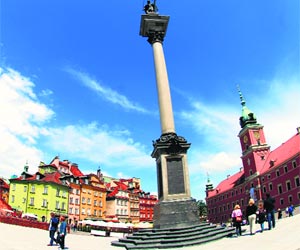
Warsaw serves up its history with a touch of nostalgia and a menu full of surprises
Eskalopki cielece w pomidorach a la toklas? Modzek po polsku? The man in a snazzy suit,moussed pony tail was taking dinner orders crisply with a fountain pen. I was hungry in Warsaws hippest restaurant,U Kucharzy,but the name seemed too daunting. I fumbled with eskalopski
Was it a broth? A doughnut? A pate? What? Everything was getting lost without translation.
In the clamour of what was once the staid kitchen of Hotel Europejski and the forgotten hunting ground of communists,gangsters and escorts,everything is open you can see chefs rustling up pigs knuckle in cognac pepper sauce,cooking the Polish pate and listing table reservation on a computer without a casing. There are no waiters in the white-tiled restaurant; cooks trundle their woks and knives. They mince the meat,beat the egg yolk into it while standing right next to you. The steak tartare gets ready before you can repeat eskalopki cielece .


It was,however,not the last time I heard of Polish ale or alcohol. Warsaw was tipsy with freedom; a day after I arrived,the nation was to celebrate the 20th anniversary of the death of communism and Soviet occupation. The Polish capital was wet and nippy,but the geraniums were blooming and the city brimmed with exuberance. I saw the statue of Polish Copernicus who decreed that the world is round,not flat; I moseyed up to streets where Pope John Paul II peered down from every wall there are 1,400 monuments to the Pope in Warsaw; I walked by a nunnery and a 19th century vodka factory.
But in Warsaw my search was unusual I was looking for a vial of cognac that lies buried behind a pillar in the Holy Cross Church. No,I had not jumped over the fence to Bacchus territory,I was just looking for the heart of Fredrick Chopin,the composer,whose heart lies preserved in cognac. Chopin,who composed the intense Ballade No. 4 in F minor,died in Paris in 1849 at age 39. His last wish: That his heart be brought back to Warsaw.
As I walked up the marble steps of the church,I could hear the hum of a hymn. In the ornate church Christ stood crucified in a corner and candles were flickering at the altar,but I did not say a prayer. I wanted to hear the heartbeats of a man who composed ballades and nocturnes. On a grey pillar on a white plaque was written: Here lies the heart of Fredrick Chopin. I stood by the wall,waiting for the heartbeat to reverberate; instead I only heard the strains of the Ballade No. 4. Maybe Chopins heart still beats in that vial of cognac. At least I heard the murmur in F minor.
Everything in Warsaw is fake, Piotr Karpinskis voice boomed. I thought Peter had muddled his facts,but the Indophile tour guide insisted on the fake. I never question a guide,they always know their facts. He was right. Warsaw was completely destroyed during the Second World War,everything razed to the ground. Only two buildings survived. But when peace returned,the city was built,stone by stone,brick by brick in three years what you see in Warsaw is a replica of the world before the bombs fell from the skies. Amidst the chore of recreating an old world,the city did not forget its bravehearts; it built the Monument to the Heroes of the Jewish Ghetto,the Tomb to the Unknown Soldier and Monument to the Katyn Victims.
But the magic lies in the Old Town,a 700-year old settlement that tells its history through the Barbican city walls,the Royal Castle,St. Johns Cathedral,the Warsaw Mermaid and the tenement houses with vibrant emulsion on their walls. There are quaint eateries and cafes,churches tucked in corners and ice cream parlours interspersed with art galleries. In the midst of ancient history is the yellow house where lived Madame Maria Curie,the first woman to win a Nobel Prize.
Wherever you go in Warsaw,you will find Stalin everywhere. The beige Palace of Culture,Stalins gift to the city,towers over everything. Isnt it called Stalins nose? I asked Karpinski. Call it the Palace of Culture. Lets not talk and remember Stalin. I feel better without him It was the 20th anniversary of freedom and Karpinski certainly did not want to look back into the era of communism and all its paraphernalia. I paid heed. No Stalin talk in Warsaw.
Warsaw was cold but I borrowed the warmth from freedoms exuberance. To partake in the joy,I walked into the famous Lazienki Park and fed walnuts to finches and warblers. And before night could bring sleep,I ordered a paczki ziemniaczane z kapusta potato doughnuts stuffed with cabbage. There was no moussed man that night to take the orders I picked the first one on the menu. In Poland there are 366 cabbage dishes,but I was too weary to run through them all. I would go to Warsaw again. You see,there are 365 of them waiting on the menu. Thats 365 good travel excuses!
Fast Facts
Getting there: Fly Delhi-Helsinki-Warsaw on Finnair.
Where to stay: If you are looking for luxury,stay in Westin,Sheraton or Bristol. Go to http://www.discover-poland.pl or http://www.hotelsinpoland.com to search for hotel options. If you are on a tight budget,search for hostels.
What to see/do: Take a city bus tour; individual tours are also available. Go to the Old Town; do the Royal Route Excursion; head to Royal Lazienki Park to feed birds,get a birds eye view of the city from the Roof Garden of University of Warsaws library. Dont miss historic sites like Monument to the Heroes of the Ghetto,Tomb of the Unknown Soldier,Palace of Culture. If you have two extra days,head to Krakow,Polands cultural capital,and Auschwitz,the largest Nazi concentration camp.
Where to eat: Folk Gospoda for traditional cuisine. U Kucharzy,the trendiest restaurant in town; Honoratka,a favourite since 1826; or sit in the Old Town Square where cafes abound.


