Journalism of Courage
 3 min read



Last week Dr Manmohan Singh successfully defended the Indo-US nuclear deal. We hope the prime ministerial self-confidence that Dr Singh exuded in Parliament will be equally evident when he meets the retired scientists of the Department of Atomic Energy DAE. The latter had appealed to Parliament directly regarding their concerns on certain aspects of the nuclear deal. In fact, the prime minister8217;s reply to the Rajya Sabha nuclear debate was directed more at the atomic energy establishment than at his allies and the opposition parties, which were merely taking political advantage of the government8217;s reluctance to discipline one of its own departments.
Dr Singh will surely seek to reassure the retired and serving DAE bureaucrats that their concerns on the deal will be fully taken into account. But we would like the PM to go a little beyond that. We believe the PM owes it to his office and the Constitution to tell the DAE, past and present, where the buck stops. He must remind the scientists that the Government of India is more than the sum of its parts. The final judgment on what constitutes national interest devolves on the elected prime minister of the country and cannot be subject to the veto of civil servants paid to give only professional advice.
We believe that the technocrats8217; demand for parliamentary intervention in the nuclear negotiations with the US poses a double jeopardy for the government. One, it signals that any department which does not like the policies of the PM can reach out to Parliament and undercut the government. Two, even more dangerous, is the threat to the Constitution that emerges out of the public campaign by the DAE. In our system of democracy, the PM and his Cabinet, till they enjoy the confidence of the House, represent the sovereign will of the people. The US Constitution, with its separation of powers between the executive and the legislature, grants the Congress a say in the negotiation of treaties with foreign powers. In our Constitution, that power is concentrated in the executive that owes its existence to majority support in the Lok Sabha. The PM must disabuse retired technocrats of the misconception that the DAE is above the government and beyond the law of the land.

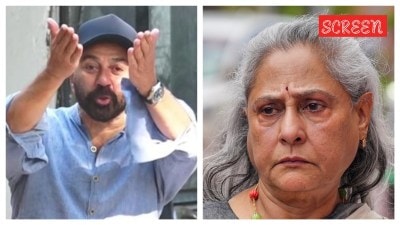
Days before Dharmendra breathed his last, a video surfaced in which his elder son Sunny Deol was seen folding hands and scolding the paparazzi for capturing the proceedings inside their Juhu residence. “Aapke ghar mein maa-baap, bachche hain? Sharam nahi aati? Ch**iyo ki tarah video bana rahe ho,” he said. That prompted a lot of backlash, even from members of the film industry.