Journalism of Courage
 3 min read



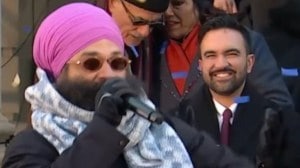
U28217;s Bono, belted out All We Are Saying Is Give Peace A Chance. On stage with him were no long-haired, marijuana-smoking anti-Vietnam protesters, but David Trimble and John Hulme, political opponents who claim the support of the largest number of Unionist Protestant and Republican Catholic voters in Northern Ireland, respectively.
Their New Labour style appearance at the special U2 concert was part of the last push for a quot;Yesquot; vote in Saturday8217;s referendum on the Good Friday peace agreement for Northern Ireland.
Most Catholics, who form the 40 per cent Irish nationalist minority, support the agreement. They see this as their first chance to have a share of power that will lead to closer links with the Irish republic. Protestants, who want to maintain the 300-year-old union with Britain are split, between those who feel the agreement will bring peace and create institutions to strengthen the union and those who see it as a sell-out to the Republicans.
Whether the peace plan works or fails willdepend on the Protestant majority. In the euphoria following the Good Friday Agreement, the feeling was that popular backing for it were guaranteed. But, in the short time since then, the quot;noquot; campaign, led by Democratic Unionist firebrand Rev. Ian Paisley, has gained strength. Opinion polls continue to show that the referendum will gain majority backing. A Ulster TV commissioned poll found that over 52 per cent of the voters supported the agreement, 20 per cent were opposed to it and 25 per cent were undecided. But, the crucial question is, by what margin?
As with all things in Northern Ireland, the sectarian division of the vote share is critical to the success both of the referendum and of the elections to the assembly which follow in five weeks. This is how it looks inside Ulster: around 40 per cent of the province8217;s electorate is nationalist SDLP and Sinn Fein and 52 per cent is Unionist Ulster Unionist party, Democratic Unionists, United Unionist party and some smaller parties and some 8 per centvote for the non-sectarian Alliance Party. A majority of Catholics or Nationalists 8212; nearly 75 per cent 8212; support the agreement, with only 4 per cent against and 16 per cent undecided.
Among the Protestants or Unionists, just over a third back the agreement, 32 per cent oppose it and 31 per cent are undecided. If the referendum finds just 50-odd per cent backing, it would mean that while a majority of Catholics voted for it 75 per cent of Catholics, around 30 per cent of the electorate only a minority of Unionists did 33 per cent of Unionists, 18 per cent of the electorate. This would bode very ill for the proposed Northern Irish Assembly elections which will be held five weeks after the referendum.
The functioning of the assembly is premised on 60 per cent support from both sides for any decision. If lack of support for the pro-agreement Ulster Unionists is mirrored in the assembly elections, it would mean that the assembly would be vulnerable to disruption from those Unionists whose politicalagenda will be fulfilled through the failure of the assembly.
Tony Blair has tried to cover ground, explicitly stating that the agreement demands prior decommissioning, and creating a new quot;minister for victimsquot;.