Journalism of Courage
 4 min read



Fifty years have passed, we are yet to be represented;
A thousand years have passed, and the land is not ours;
A million years have passed, the history books have missed us.
Dhorpada8217;s men and women still gather under the tamarind tree to remind themselves how they were cheated of an ancient inheritance. In the shadow of the low, brown hills, amidst the stillness of the forest, their voices echo a primeval cry. On evenings when Punyabhau Gavit brings along his pawree a wind instrument wrought from a gourd, the effect, they swear, is mesmeric.
These days, it is difficult to cajole the old man though. Years of litigation over a piece of farmland adjoining the forest have worn down the 75-year-old Bhil. Keeping track of court rulings and government circulars are more than an unschooled tribal can handle, says Gavit, raising gnarled hands that suggest a lifetime of toil.
His sons, Bapu, Bapdya and Bhikha, are the new torchbearers of a movement called the Satyashodak Gramin Kashtakari Sabha, which defends the rights of the 8216;8216;encroachers8217;8217; a legal definition over land brought under the ambit of the Forest Conservation Act. The fact that their forefathers freely roamed in this very territory, hunting in the forests and farming in the plains, is a sacred covenant for these warm and friendly people.
Run-ins with the law are frequent. Perjury is an occasional hazard. If the forest guards in Nandurbar come looking for any of the Gavit brothers while he is away, one of the other two usually stands in. 8216;8216;In court, they answer to each other8217;s names when they are picked up for prosecution and detained, say for a week or 21 days. To the law, they look the same. Anyway, it keeps the legal process smooth,8217;8217; laughs a cheeky neighbour.
Since the early 8217;708217;s when the State began tackling 8216;8216;encroachments8217;8217; in the hilly region along the Maharashtra-Gujarat border, welfare groups have waged a struggle to safeguard the aborigine8217;s traditional rights. Today, nearly three decades later, the government has finally come around to concede a broad compromise: tribals who can prove they have been tilling a piece of land as early as 1978 will be allowed to keep it.
8216;8216;There is a realisation now that the tribals were unable to deal with lower-level officials who grant land titles. They could not even tackle sophisticated outsiders, who are willing to bribe the constabulary and revenue officers to corner forest land,8217;8217; says local activist Kishore Dhamale.
The notion of permanent, individual ownership of land was anyway foreign to most tribal societies. Land, even when seen in terms of ownership, was a communal resource, used by the ones who needed it.
So, with courts and government settling for a status quo 8212; the next hearing in Supreme Court is sometime this month, land-use rights may be restored to almost three-quarters of the 40,000 8216;8216;encroachers8217;8217; in this district, where 75 per cent of the population is made up of tribals.
However, for some like Karansinh Kokani, the first among the Bhils to be heard in the Supreme Court, this battle is nowhere near over. Now reduced to a landless labourer who works on daily wages, Kokani may regain only a small portion of his share, not enough to feed his family. 8216;8216;The crop will sustain us only a few months. I will have to go and look for work in the markets in Gujarat,8217;8217; he says.

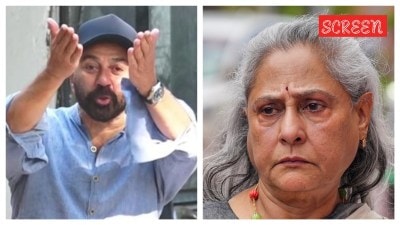
Days before Dharmendra breathed his last, a video surfaced in which his elder son Sunny Deol was seen folding hands and scolding the paparazzi for capturing the proceedings inside their Juhu residence. “Aapke ghar mein maa-baap, bachche hain? Sharam nahi aati? Ch**iyo ki tarah video bana rahe ho,” he said. That prompted a lot of backlash, even from members of the film industry.