Journalism of Courage
 5 min read



India celebrated its 60th birthday last week with a raucous parliamentary debate over nuclear energy and its new strategic relationship with the United States. New Delhi had the air of the capital of an emerging world power looking ahead into a promising, if complicated, future.
Pakistan marked the same occasion by sinking deeper into the past. The corrupt backroom dealing between military rulers and politicians that has produced a cycle of disasters for the Pakistani nation resumed 8212; aided by the hidden hand of US diplomacy working to preserve President Pervez Musharraf8217;s dwindling power in Islamabad.
The anniversary of the partition of the Asian subcontinent six decades ago showed the region8217;s two contrasting faces: a giant, open democracy and a sclerotic but nuclear-armed garrison state. It also revealed two contrasting faces of the Bush administration8217;s foreign policy, where pockets of bold thinking about the future compete with the need for short-term fixes that rely heavily on illusion.
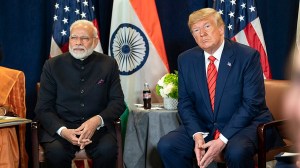
Indian Prime Minister Manmohan Singh defended the nuclear accord against a barrage of attacks from the Communist Left and the reactionary Hindu right, keeping alive Bush administration hopes that the President can finally translate unconventional thinking in foreign policy into a substantial achievement.
The accord underpins a transformed US-India relationship that is essential to the struggle against transnational jihadist terrorism. It sets the stage for a badly needed reframing of the global nuclear non-proliferation agreements and practices that failed to stop Pakistan from becoming the world8217;s nuclear Wal-Mart. And it is a key to hopes for a more effective international approach to the real dangers of global warming.
Singh does not need parliamentary approval of the deal, which will open the way for the United States and other nations to sell nuclear reactors and fuel to India for peaceful purposes. If he survives a vote of no confidence, as expected, Singh will put the accord into effect once the US Congress approves its final details later this year. Such approval in Bush8217;s twilight months will represent a rare triumph, which has been shepherded along by Undersecretary of State Nicholas Burns and other forward-looking officials.
But that is only half the anniversary story. Pakistan at 60 represents failure, both for itself and for US diplomacy, as starkly as India represents the promise of success on both counts.
Successive Pakistani military regimes have ousted corrupt and ineffective politicians, feathered their own nests for as long as they could, and then turned the shambolic states of affairs they have created over to unreformed politicians, starting the cycle all over again. The implicit deal was that neither side would implement fundamental change in the deeply fractured society they ruled.
When he took power in 1999, Musharraf seemed capable of breaking the pattern. Less corrupt, far more agile and a great deal smarter than previous military rulers, the general was not an unappealing alternative to the civilians he displaced. His periodic peaceful overtures to India seemed more genuine than anything accomplished by elected Prime Ministers such as Benazir Bhutto and Nawaz Sharif.
Musharraf self-destructed despite 8212; or perhaps because of 8212; the windfall of US aid that poured in after September 11, 2001. He received kid-gloves treatment from Washington even as he failed crucial tests on punishing his country8217;s globally destabilising nuclear proliferation and eliminating al-Qaeda, Taliban and Kashmiri terrorist bases that are aided by his intelligence service. The civilian population is effectively in revolt against Musharraf.
Secretary of State Condoleezza Rice and her aides have reportedly urged him to pursue secret negotiations with Bhutto to schedule elections and share power with her. But if restoring Bhutto to power is part of the solution, the problem may well be insoluble. That ploy is a return to the broken record of the past, a triumph of desperation over experience.
Hitting dead end in Pakistan did not just happen. It is the result of consistent U.S. decisions to apply short-term solutions to one of the world8217;s most serious long-term problems. To curry favor with China, to spite India8217;s notoriously prickly leaders, to bleed Soviet forces in Afghanistan or for many other immediate purposes, Washington has alternately indulged, bribed or ignored Pakistan8217;s leaders and their society8217;s deep-rooted problems.
The new US relationship with India offers much for the future 8212; including a model for dealing with a South Asian nation just turning 60 by seeking imaginative long-term change instead of pursuing traditional stopgaps to get through the latest crisis.