Journalism of Courage
 3 min read



NEW DELHI, November 29: Pollution in the Capital is assuming frightening proportions with over 3,000 tonnes of air pollutants being spewed into the atmosphere every day.
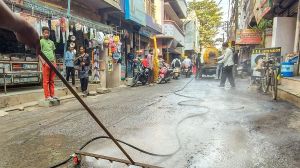
Though automobiles are the prime offenders 8212; accounting for 67 per cent of total air pollution that is causing various respiratory ailments 8212; over 40,000 sweepers in the city are further choking the air by raising thick clouds of dust and dirt during peak morning hours.
The dust particles lodge themselves in the lungs and subsequently cause various allergies and respiratory problems. Violent bouts of sneezing, an itchy throat, breathlessness and black sputum are some of the immediate effects of being exposed to high levels of dust. And much of that can be avoided just by changing the timing of daily sweeping by the municipal sweepers.
In a Public Interest Litigation PIL that came up before the Delhi High Court recently, a resident of Shakur Basti in northwest Delhi sought a direction to the municipal authorities for scheduling the sweeping of Delhi8217;s roads and bylanes during the pre-dawn or post-midnight hours 8220;to save the public from the daily torture8221;.
8220;The sweepers start cleaning and sweeping the roads at around 7 am and the process continues till 10 am, raising in its wake thick clouds of dust particles and other pollutants in the atmosphere. Since a majority of Delhiites leave their homes for work and the children, for schools and colleges during these peak morning hours, it directly exposes them to the pollution, serious affecting their health,8221; petitioner Ravinder Raj said.
It is an established fact that children are the most affected due to pollution. And early morning is also the time when these kids are on the roads, waiting for their school buses, inhaling dust and dirt.
Besides the adverse health impacts, the process is also a nuisance and detrimental for general hygiene and cleanliness that gets compromised with dust on clean clothes and the body. Civic agencies in the developed world schedule sweeping activities during the wee hours.
To make the municipal authorities sit up and take note, the petitioner first served a notice on them on June 5, the World Environment Day, this year. Municipal commissioner V.K. Duggal was requested to ensure that the cleaning and sweeping of roads, streets and bye-lanes is completed during the pre-dawn hours to avoid dust pollution and protect health of the citizens. The karamcharis8217; could be adequately compensated in terms of better wages, lesser working hours for doing the same, he suggested.
8220;But the commissioner did not bother to reply to the notice. Nor did he initiate any remedial measures, compelling me to approach the honourable high court,8221; he said.
According to the World Resources Institute WRI, respiratory infections kill 4 million children in the world every year, the casualties that can be easily prevented through environmental management. And small changes like the ones suggested in the petition can indeed greatly contribute in such efforts.
The Delhi High Court, acting on the petition, has now directed the MCD to consider the suggestions given in the petition and do the needful. A copy of the petition was forwarded to the municipal commissioner last week for the same.