Journalism of Courage
 4 min read



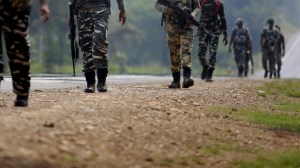
The ongoing Operation Sarp Vinash to flush out terrorists from their hideouts in the Hill Kaka, Surankote area of Jammu 038; Kashmir has united public opinion on two counts. There is unanimous appreciation of the operation that has extended over many months. It8217;s a difficult operation carried out in an inhospitable terrain and against an enemy that is well-entrenched some 35 kms on our side of the Line of Control.
The response of nearly everyone is uniform too: surprise. Consternation and embarrassment over how terrorists continued to stay, train, and carry out their activities so far inside the Line of Control for over four years. It has also been reported that at any given time there were as many as 250 to 350 terrorists in the area. Is this another Kargil? Or worse? The only certainty in these uncertain times is that this should not recur.
Some ten battalions of the Army8212;8000 to 10000 troops8212;Air Force Unmanned Aerial Vehicles UAVs, and helicopters were used to mount the operation. The preparations took over four months and involved the building of three helipads and air lifting hundreds of tonnes of load. Even then, only 65 to 70 terrorists were killed in the first phase; the other 200 to 300 escaped. The area is now being combed to catch them but it8217;s not an easy job. It would obviously be far better to ensure that the terrorists are neutralised well before they take root in any area.
Intelligence, including electronic intelligence, is very important to avoid another such incident. Extended surveillance is now possible with the introduction of UAVs. And where sensors and capabilities are not available or are insufficient, there has to be an increase in human intelligence HUMINT resources. HUMINT will always be the most important single factor in action against terrorists.
We have been fighting crossborder terrorism in J038;K for nearly 15 years. With the experience gained, it would be worthwhile to train special forces who could operate as guerrillas in reverse. Small, self-sufficient teams could be used to reconnoiter given pockets and also win the confidence of local people.
No terrorist organisation, particularly of the 8216;crossborder8217; variety can survive too long without local support. There are bound to be many pockets such as Surankote that exist along the Line of Control. If adequate number of small teams monitor different pockets regularly, it would be difficult for terrorists to entrench themselves.
There will be occasions when the teams need to be supported by fire power and close surveillance. The Air Force can help. It8217;s easy today to carry equipment that can give accurate coordinates of our position or of the targets. Also small, light and effective communications systems are available. Properly planned, the UAVs or airborne sensors can look for terrorists when the approximate position is known, and keep them under constant surveillance. With air support, cordons can be established and troops augmented.
The need of the hour is to chalk out a well-thought out strategy. We must remain one step ahead of the terrorists and have the resolve to undertake a series of operations against them. Each success will be a morale booster for our forces and will demoralise the enemy. And while organisational issues have their place, they must not be allowed to become the only end.
The author is former vice chief of air staff