Journalism of Courage
 5 min read



WASHINGTON, JAN 15: Infelicitious though the expression might seem, the question on everyone8217;s lips on the morning of President Bill Clinton8217;s impeachment trial is: Will Monica Lewinsky be called to testify before the Senate?
Called she certainly was. Republican lawmakers who are prosecuting Clinton before the Senate reportedly sounded out her lawyers on Wednesday, but they were rebuffed. Ergo, she will probably be subpoenaed and forced to testify.
Of course, Ms Lewinsky herself is incommunicado, and the buzz hath it that the young lady is in hiding, working out with a personal trainer to knock off some pounds ahead of a widely awaited television interview on one of the big networks.
The Republican reasoning in calling her to the stand is aimed at disproving one of the pillars of the President8217;s defence, which centres around the definition of sex. Since it is being argued, rather indelicately, that it was Ms Lewinsky who performed the sex act and the President did not he presumably pondered overweighty matters, the prosecuting team hopes to get the young lady to detail what exactly he was doing while she was at it.
Crass as it may sound, and much as everyone winces at the tawdry details, the whole thing boils down to finding out who touched what, when and how.
There were also indications that the Republican team would call the President himself before the Senate. Clinton aides have said the President won8217;t take the stand on his own volition and have doubted whether the Senate has the power to compel him to appear before it.
The President8217;s higher defence centres around what the White House believes is a constitutional coup in the works.
Amid feverish preparations for the unprecedented Senate trial, Republican lawmakers and the Democratic White House fenced verbally about a process not seen by any living person. Clinton8217;s defence team warned that convicting him would overturn the popular will of the people and subvert the American system, making the President serve at the pleasure oflawmakers, as in many parliamentary systems.
8220;Removal of the President8230; would defy the constitutional presumption that the removal power rests with the people in elections, and it would do incalculable damage to the institution of the Presidency,8221; Clinton8217;s lawyers argued in a memorandum filed before the Senate ahead of the trial.
Clinton himself made his first public comments on the trial, saying the 8220;important thing for me is to spend as little time thinking about that as possible and as much time working on the issues8230; as possible8221;. But he made known his views indirectly, pointing out that over 900 Constitutional experts had said the case against him did not constitute sufficient grounds for impeachment.
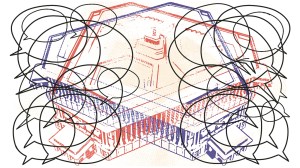
The Senate was a beehive of activity, as it was being physically retrofitted to accommodate a courtroom-like trial. The 13-member all-Republican House prosecution team, referred to as Floor Managers, will conduct their case from two specially fitted desks. New cameras and microphones werebeing installed in the chambers. The opening arguments from both sides, expected to go on till the middle of next week, will be telecast live. All 13 Republican Congressmen happen to be former lawyers.
So rare is the trial that the Senate has had to make up rules as it gets going. No living person has witnessed the impeachment of a President, although the joke is it is not inconceivable that some Senators could have been around at the time of the last impeachment in 1868. The Senate has several venerable legislators like Strom Thurmond, 96, and Robert Byrd, 82, who go back a long, long way.
Ahead of the trial, which begins at 1 pm Thursday 11.30 pm IST, the 100 Senators, who will act as the jury, received a one-page list of do8217;s and don8217;ts from their leadership, advising them on trial decorum. They were told to be present at all times, not to whisper or chat on cell phones, to vote by rising from their chairs, and to address the Chair as Mr Chief Justice.
The most difficult part for this lawmakingelite, which regards itself as the most powerful club in the world, is the code of silence they are sworn to. Normally voluble and verbose, the Senators can only ask written questions through the Chief Justice who acts as a moderator.
Although sworn to be an impartial jury, many Senators have already made known their views and they might be difficult to rein in before the media microphones that are usually placed outside the chambers for post-debate sound bites. Some, like Democrat Senator Tom Harkin of Iowa, has called the largely-Republican case a sham, counterfeit and a pile of dung.
Amid such flourishes of partisanship, any assumption that the trial will proceed smoothly seems farfetched.

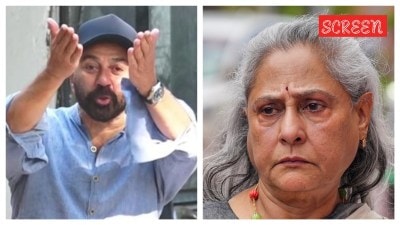
Days before Dharmendra breathed his last, a video surfaced in which his elder son Sunny Deol was seen folding hands and scolding the paparazzi for capturing the proceedings inside their Juhu residence. “Aapke ghar mein maa-baap, bachche hain? Sharam nahi aati? Ch**iyo ki tarah video bana rahe ho,” he said. That prompted a lot of backlash, even from members of the film industry.