Journalism of Courage
 3 min read



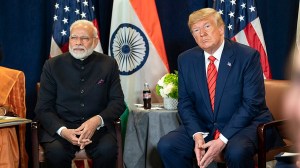
The front page of the latest People8217;s Democracy reflects the CPM8217;s pet hates: George Bush8217;s United States and the Sangh Parivar, with the 8220;big business media8221; following close. Party boss Prakash Karat8217;s lead article on Bush8217;s visit starts by stating the party position. 8220;India has become a strategic ally of the United States,8221; he writes, and on this it has the support of the opposition BJP. He feels the nuclear deal, far from setting up India for a leadership role among nations, had actually restricted its strategic autonomy and that would affect India8217;s chances of playing a vital role in building collective Asian security interests. According to Karat, the US was viewing the strategic partnership with India as a political, economic and military counterweight to China. So what does the CPM plan to do? It will 8220;work more determinedly to fight back the growing US influence on the country8221;. But, Karat does not specify how this fight will be staged. In fact, the CPM general secretary merely repeats the party8217;s line on the issue despite the rapidly changing ground situation. Looking for clues between the lines does not help either.
Poles apart
Another Diabolical Yatra8221; is how an editorial describes L.K. Advani8217;s recent announcement of a yatra. It accuses the BJP and the RSS of seeing an opportunity to regain lost political ground when it should have been talking of unity after the Varanasi blasts 8212; clearly the CPM and the BJP are at opposite ends on what constitutes unity and political polarisation. The editorial says the political gains from Advani8217;s previous yatra had whetted its appetite and it now wants to repeat that success. The CPM is also touchy about the charge of 8220;minority appeasement8221; from the BJP, especially after the Left-led rallies on the Iran issue saw Muslims participating in large numbers. The editorial refers to the charge but does refute it, and only describes it as 8220;outrageous8221; and aimed at sharpening communal polarisation.
Waiting for a revolution
The resolution adopted at the All India Convention of Dalits held late last month and inaugurated by Prakash Karat is in many ways an indictment of Congress rule since Independence. Social exclusion and economic discrimination continue in one form or the other even now and there has been no basic change in the caste system since Independence because the bourgeoisie has compromised with the landowning classes to foster caste prejudices. The Sangh Parivar is accused of being reactionary and opposing amendments to the Hindu code and the implementation of the Mandal Commission recommendations. The view adopted at the convention was that liberalisation, privatisation and globalisation had hit Dalits, adivasis and other backward castes, with privatisation affecting reservations for SCs and STs. What the resolution suggests is reservations in the private sector.
Sweep in the east
The CPM swept the village committee elections held under the Tripura Autonomous District Council. In his statement, Prakash Karat said that of the 527 village committees, the CPM had won 503.
Compiled by Ananda Majumdar