Journalism of Courage
 2 min read



In mid-July, senior American intelligence officials called the leaders of the International Atomic Inspection Agency to the top of a skyscraper overlooking the Danube in Vienna and unveiled the contents of what they said was a stolen Iranian laptop computer.
The Americans flashed on a screen and spread over a conference table selections from more than a thousand pages of Iranian computer simulations and accounts of experiments, saying they showed a long effort to design a nuclear warhead, according to European and American participants in the meeting.
The documents, the Americans acknowledged from the start, do not prove that Iran has an atomic bomb. They presented them as the strongest evidence yet that, despite Iran8217;s insistence that its nuclear programme is peaceful, the country is trying to develop a compact warhead to fit atop its Shahab missile, which can reach Israel and other countries in the Middle East.
The briefing for IAEA officials including its director Mohamed El Baradei, was a secret part of a US campaign to increase international pressure on Iran. But while the intelligence has sold well among countries like Britain, France and Germany, which reviewed the documents as long as a year ago, it has been a tougher sell with countries outside the inner circle.
The computer contained studies for crucial features of a nuclear warhead, said European and American officials who had examined the material, including a telltale sphere of detonators to trigger an atomic explosion. The documents specified a blast roughly 2,000 feet above a target 8212; considered a prime altitude for a nuclear detonation.
Moreover, this chapter in the confrontation with Iran is infused with the memory of the faulty intelligence on Iraq8217;s unconventional arms. In this atmosphere, though few countries are willing to believe Iran8217;s denials about nuclear arms, few are willing to accept the United States8217; weapons intelligence without question.
8216;8216;I can fabricate that data,8217;8217; a senior European diplomat said of the documents. 8216;8216;It is open to doubt.8217;8217; Robert G. Joseph, the under secretary of State for Arms Control and International Security, who led the July briefing, declined to discuss any classified material from the session but acknowledged the existence of the warhead intelligence.
Even if the documents accurately reflect Iran8217;s advances in designing a nuclear warhead, Western arms experts say that Iran is still far away from producing the radioactive bomb fuel that would form the warhead8217;s heart. American intelligence agencies recently estimated that Iran would have a working nuclear weapon no sooner than the early years of the next decade.
Still, nuclear analysts at the international agency studied the laptop documents and found them to be credible evidence of Iranian strides, European diplomats said. Europe and US officials with detailed knowledge of the intelligence said they believed it reflected a concerted effort to develop a warhead. 8216;8216;They8217;ve worked problems that you don8217;t do unless you8217;re very serious,8217;8217; said a European arms official. NYT

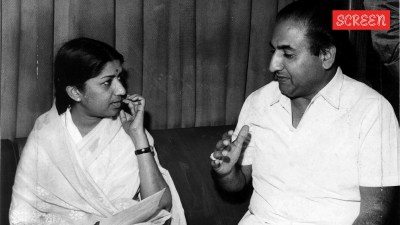
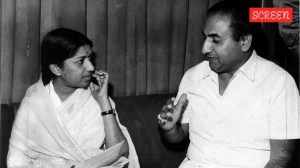
1963 cast a dark shadow on the otherwise successful partnership between Mohammed Rafi and Lata Mangeshkar. Rafi was known to be a simple, naive man who loved his job and preferred to stay away from the business of the movies. It was perhaps his disinterest in this business aspect of the movies, that caused a clash between the duo.