Journalism of Courage
 4 min read



The big question: will we stay and even expand our contribution to the UN Interim Force in Lebanon, or will we pull out? More importantly, on what basis should we make such a decision?
India has a proud record of commitment to UN Peacekeeping Operations UNPKO. It is, in fact, among the largest troop contributors to UNPKO. Of the 73,008 people serving as UN peacekeepers on July 31, 2006, some 9,290 were Indians. This country also provided the bulk of personnel for the three international control commissions in Indochina after the 1954 Geneva Agreements. Many Indian officers and soldiers have been decorated during UNPKO. This is a record in which India and its armed forces can take immense pride.
Participation in UNPKO is neither a politically contentious issue in India, nor a constitutionally complicated exercise. It has not been a divisive subject of public debate. PKO permit India and other countries to reconcile the potential tension between the commitment to international idealism and the requirements of national security, but there is no automatic commitment to participate. Each request for a contribution to a UNPKO is decided by the government of the day.
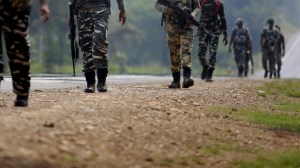
The Indian army has adequate manpower readily available and trained for peacekeeping, experience in all types of climate and terrain, and the full range of military capabilities to meet all types of UNPKO. It maintains a 4,000-strong Standby Brigade Group with all-round capability for the UNPKO. The force is kept in a high state of readiness; its actual commitment is, of course, subject to the government8217;s decision.
Why has India been popular as a peacekeeper? There are three broad reasons why India was asked to contribute troops to traditional peacekeeping operations: the size and professionalism of its armed forces; the lack of such forces from most developing countries until recently; and India8217;s influence in world affairs, through initiatives like the non-aligned movement. Why did India agree to take part in so many UN operations? Perhaps a clue lies in what Jawaharlal Nehru once said: 8220;We cannot shed the responsibilities that go with a great country.8221;
There has, however, been a creeping apartheid in UN peacekeeping, where the poor countries contribute troops while the rich western countries provide logistical support and dominate the senior policy-making ranks in the UN system. Of course India gains some credit for this. But have Indian policy-makers done a hard-nosed evaluation as to whether the credit ledger is overshadowed by the debit? In particular, in public, governmental and UN perception around the world, this may contribute to the bracketing of India with poor third world countries with bloated and antiquated defence forces instead of a highly professional and modern military force.
If this sounds too harsh, consider the following observation in a recent article: 8220;the usual suspects of UN peacekeeping, the impoverished third-world armies who only deploy their soldiers for their per diem8221; International Herald Tribune, 26 July. The writer of this piece, incidentally, is Margarita Mathiopoulos, chair of the Transatlantic Forum of the Free Democratic Party of Germany and CEO of the European Advisory Group.
We believe strongly, even passionately, in the United Nations and in the great value of its numerous peace operations. Independent analyses by US-based think-tanks, most notably the Rand Corporation, have confirmed that such operations represent excellent value for money. We also believe that India has much to offer and much to gain by contributing generously to such UN operations. But this cannot be open-ended and unqualified. What, in hard terms, has India gained in return? Certainly not a permanent seat in the Security Council.
There is a tendency for us to be seduced by words of praise. Such gratification is no substitute for a rigorous calculation of national interests. We would strongly urge that India look at the balance of composition of UN missions and contribute only if and when there are at least some Western and industrialised countries also willing to shoulder the burden. Only then will we begin to put a distance between the professional Indian military and the image of UN operations as something fit only for impoverished contributors in it for the money.
Banerjee, a retired major general, is presently director, Institute of Peace and Conflict Studies, New Delhi; Thakur is senior vice rector of the United Nations University in Tokyo