Journalism of Courage
 4 min read



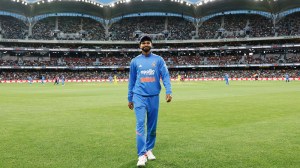
Adelaide is known as the City of Churches, but a team shouldn8217;t rely too heavily on prayer to win cricket matches at the picturesque Oval.
It requires a combination of good batting, which isn8217;t too hard as the pitch is true, plus a combination of good pace bowling to claim the first innings victims and then a pair of competent spinners to complete the task of taking twenty wickets.
Unfortunately the Indian team haven8217;t had the opportunity to play a first-class match at the Oval prior to the Test, which would normally be a huge handicap for a side that has only three players who have previously toured Australia, but there is one compensating factor; the practice pitches play in identical fashion to the one in the middle.
The conservatism of the Australian selectors has made the job of batting a little easier for India. Following Adam Gilchrist8217;s amazing success with the bat, the selectors had the ideal opportunity to include five bowlers, one of them being the extremely fast and promising Brett Lee.
Iwould8217;ve also included Stuart MacGill to ply his leg-breaks rather than Colin Miller8217;s pedestrian combination of medium-pace and off-spin. However, I think the next major trend in Test cricket will see the more successful teams regularly playing a reasonable fifth bowler, as most games finish with a result these days, because very little time is lost to weather. As it8217;s generally accepted that bowlers win matches, teams that have the best-equipped attacks will be more successful and therefore, unearthing a good bowling all-rounder and a keeper who can bat will be like striking gold.
Consequently, the main obstacles standing between the Indian batsmen and success are Glenn McGrath and Shane Warne. Whilst they won8217;t be easily overcome, a more aggressive approach by the selectors would have made India8217;s task a lot more difficult.
For India to be successful they must get away to a solid start and this may mean using VVS Laxman as opener. Laxman8217;s form has been good, which is not surprising, as he is a strongback-foot player and is well suited to Australian conditions. In Australia the pitches are generally moist to start with and then dry out quickly with the heat, so a pair of good openers who can safely negotiate the early difficulties is an extremely valuable commodity, followed as they are by India8217;s talented array of stroke makers.
As it stands, the Australian batting is formidable, but the bowling is not as potent as it could be. If India do get a good start batting first, they could make life difficult for McGrath amp; Co. Some early wickets with the new ball would translate into a pressure situation for the Australian middle-order. However, if Australia reverse the situation and make a good score batting first then this will allow McGrath and Warne and to a lesser degree the much-improved Damien Fleming to attack the Indian strokemakers.
A lot has been said about the McGrath-Tendulkar battle and this will be important, but it will favour the fast bowler more if the Indian openers are out cheaply.Equally important will be the battle between Javagal Srinath and Michael Slater, because victory to the aggressive opener would almost certainly sentence India to a big chase.
This has the potential to be an interesting series and not as one-sided as some have predicted. India have been given the opportunity to start well in Adelaide by conservative selection, but the tourists shouldn8217;t pray for any more Australian benevolence; despite being in the City of Churches their prayers are unlikely to be heard.