2 min read

Journalism of Courage




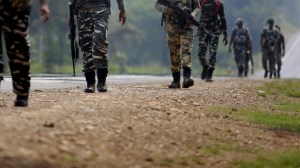
Hundreds of Ethiopian troops in armoured vehicles rolled into Somalia on Thursday to protect their allies in this country8217;s virtually powerless government from Islamic militants who control the capital.
The move could give the US-backed Somali government its only chance of curbing the Islamic militia8217;s increasing power. But Ethiopia8217;s incursion could also be just the provocation the militia needs to build public support for a guerrilla war.
The neighboring countries are traditional enemies, although Somali President Abdullahi Yusuf Ahmed has asked Ethiopia for its support. Thousands of Somalis have taken to the streets in recent weeks to denounce witness accounts of Ethiopian troops along the border.
The government of Somalia wields no real power, has no military and only operates in Baidoa, about 100 miles east of the Ethiopian border. The Islamic militia of the Supreme Islamic Courts Council stepped into the power vacuum in recent months, seizing the capital of Mogadishu and most of southern Somalia.
On Wednesday, the militia reached within 20 miles of Baidoa, but began pulling back on Thursday as more than 400 Ethiopian troops entered Baidoa.
In the absence of his own force, President Yusuf has apparently chosen to rely on his longtime ally, Ethiopia, for protection. But Yusuf8217;s reliance on Ethiopia appears to make him beholden to the country8217;s traditional enemy and hurts his legitimacy.
If the competition for power should become violent, there is little doubt that Ethiopia has the superior fighting force. This week8217;s developments could disrupt peace talks scheduled for Saturday and aimed at negotiating some kind of partnership between the government, and the Islamic group, whose authority in Somalia is undeniable.