4 min read

Journalism of Courage




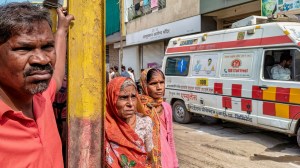
The twin explosions that rocked the Assam capital on November 5, leaving 15 dead, has brought three significant aspects to the fore. One, militants can strike at will, notwithstanding the beefed-up security that the authorities talk about. Two, that the ULFA still has the capability to do great damage, even after being considerably weakened after the Operation All-Clear was carried out by the Royal Bhutanese Army in December 2003. Three, that Assam8217;s civil society is yet to speak out against violence and terrorism, even though people are getting increasingly disenchanted with violent ideologies.
Every time militants strike, the routine follows predictable lines: a security review is ordered, an announcement is made of 8216;renewed8217; operations as well as more coordination and intelligence sharing among the security forces. This is followed by statements about the strength of the ULFA, stories about their desperation, and about how some of its cadre are anxious to surrender. Finally, there are some retaliatory killings, like the one that left a 5-year-old boy dead at Pengeri in Upper Assam on Wednesday.
The pattern on the ULFA front is also the same: it prefers to remain silent if the casualty figure is high, or it may sometimes deny involvement or even blame the government for the incident. In the latest case, too, it has kept quiet, except for one statement made by its vice-chairman Pradip Gogoi 8212; who has been in jail for over seven years now. Gogoi maintained that the ULFA was not involved in the Guwahati blasts. The outfit had behaved similarly, when ten innocent children were killed in an explosion at Dhemaji, in Upper Assam, during school Independence Day ceremonies two years ago.
People are certainly outraged by such attacks, but the government has repeatedly failed to capitalise on this and turn public opinion against violence and terrorism. Interestingly, the public response after the Guwahati blasts has been fairly subdued and the reason for this is simple: people believe that there are too many powerful interests which do not want insurgency to end.
Look at the changing pattern of ULFA8217;s activities. The outfit was more into gunning down individuals until, say, 2001. The year 2002 saw a significant shift in the pattern in violence since the ULFA8217;s inception in 1979: the outfit started using explosives for the first time. While it caused 18 explosions in 2002, the figure went up slightly the next year. But what has been happening since 2004 is indeed noteworthy: the group caused 103 explosions that year, which went up to 121 in 2005. This year, the ULFA has also caused a 100 explosions.
If intelligence reports are to be believed, the strength of the ULFA has also come down significantly, from around 4,000 during its peak in 1990-91to just about 800 now. Although these figures can be misleading, official records also maintain that while over 11,000 rebels have been arrested since 1991, and about 8,500 have surrendered, at least 1,100 have died in encounters with the security forces. Going by recent arrests, it has been proved beyond doubt that the ULFA has, like most other armed groups, started recruiting young boys to carry out their activities, including planting explosive devices and throwing grenades.
Significantly, the outfit has been consistently losing public support. There was a time when a large section of society was quite happy with its activities, especially since it had managed to create a Robin Hood image for itself 8212; helped by friendly media coverage. But a lot of water has flowed down the Brahmaputra in the past two decades, and public attitudes have also changed significantly. People across the state are now increasingly taking out processions and organising meetings to protest against killings by the ULFA.
Subscribing to the ULFA8217;s argument that the region has been long neglected by New Delhi is one thing; supporting the ULFA8217;s violent acts quite another. And as far as explosions, killings, abductions and extortions are concerned, the average Assamese has already gathered courage to fight them.
What is disappointing is that there is little support for them in this battle 8212; either from political parties, civil society organisations like the Assam Sahitya Sabha, or the government. That is the present tragedy of Assam.