Journalism of Courage
 3 min read



The employees of the nation8217;s biggest bank went on an indefinite strike on Monday, highlighting two issues that can be debated a whole week. First, union activism has to be especially responsible in critical institutions; the State Bank of India8217;s size and stature 8212; it holds one-sixth of total bank deposits 8212; make it one. Some Left leaders, especially in Bengal, have come round to this view. But the perspective of all-India unions, like those in banking, seems to be that the harder the line, the better the argument.
The second issue is the urgency with which calculation of pension payouts 8212; the main grievance of SBI strikers 8212; should be made transparent. Pension tends to be an emotive issue and it could trigger many labour unrests in the future. In the case of banks, the RBI 8212; the regulator 8212; should require them to prepare annual actuarial evaluations of pension liabilities. It may well be the case that the SBI pensions are well funded and employees can be paid higher pensions. However, this cannot be known unless an actuarial evaluation is done. Alternatively, if it is found that pension liabilities of PSU banks are dangerously high, the situation can pose a systemic risk and needs to be amended.
The Centre has addressed the issue of high implied pension debt for government employees by introducing the defined contribution new pension scheme NPS. As of now there is no proposal to bring PSU bank employees under this scheme. But since PSU banks are owned by the government, the pension liability of these banks is ultimately the liability of the government, as is the case with the Seamen8217;s Provident Fund. If PSU banks have been kept out of the ambit of the NPS because of the opposition to it by unions, the least that can done is to make sure that at least the defined benefits promised are fully funded. Defined benefits, of course, is ultimately an unviable system in most cases and it is necessary to overcome union opposition to this. Banking unions tend to organise themselves around the old battle lines, and they can do it because so much of the banking sector is government-owned and collective bargaining 8212; industry-wise 8212; has been the norm. Sooner, rather than later, the government has to address these issues.

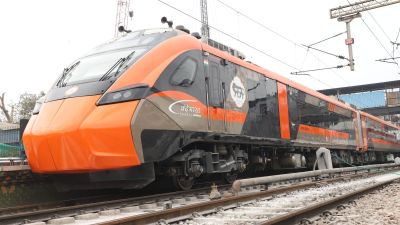
Railway Minister Ashwini Vaishnaw on Saturday said Vande Bharat Sleeper trains will be introduced across all states, including Kerala. He made the comments during a press briefing at New Delhi railway station after inspecting the Howrah–Guwahati–Howrah Vande Bharat Sleeper rake, which is set to be launched this month.