Journalism of Courage
 2 min read



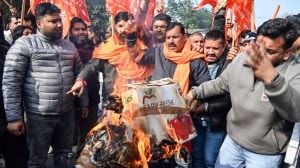
The kind of vigilantism being furthered at Baroda8217;s faculty of fine arts is alarming. First, the police rush to an ugly confrontation and come down heavily against what should have been the aggrieved party. Chandramohan, an art student, is roughed up because some persons believe he has violated their notions of religious sensibility. The police arrive and arrest him, no doubt quoting some provision of the Indian Penal Code. Then, when the dean of MS University, to which the faculty is affiliated, refuses to shut down an exhibition organised to express solidarity with the student, he is suspended.
For the sake of argument, let us accept that the works of art 8212; made by Chandramohan and exhibited thereafter by the artist community 8212; were considered obscene by some and even caused affront. Even then, a case for censorship simply cannot be made in a liberal, free society. Art is, in fact, meant to be subversive: it aims to change the way very personal things are depicted in a public viewing. It is difficult, no doubt, to explain such things to vigilantes fuming for a fight. But it may also be the right moment to reflect how the events in Baroda are simply the lumpenisation of the long-standing illiberal public consensus in India when it comes to freedom of expression. There is a long and sturdy tradition in this country of banning books that may upset a particular community 8212; sometimes only on account of the way in which they are spoken off, and nothing to do with their contents as such. Paranoia still informs the statute book on national symbols, like the flag and the anthem. Isn8217;t it ridiculous that the state still sets by decree the exact dimensions in which the flag must be drawn?
The point is not to make a case for deviations for deviations8217; sake. The point is that it is only by reformulation that people internalise markers of their 8216;identity8217; and practise discretion, and this sometimes comes with radical alterations. Let8217;s learn to live with that.