Journalism of Courage
 3 min read



Francois Bayrou, the centrist candidate who placed a strong third in the first phase of France8217;s presidential contest last weekend, on Wednesday delivered a fierce condemnation of the two front runners8212;Nicolas Sarkozy and Segolene Royal8212;and said he would not endorse either in a run-off vote on May 6.
The decision by Bayrou, who has promoted himself and his Union for French Democracy party as 8220;a third way8221; to bridge the traditional left-right divide in French politics, leaves his bloc of 6.8 million swing voters up for grabs. That will heighten the already intense competition between Sarkozy, of the centre-right Union for a Popular Movement candidate, and Socialist Royal, with just 12 days remaining in the campaign.
Sarkozy won the first round of the election last Sunday with 31.2 per cent of the vote, compared to 25.9 per cent for Royal and 18.6 per cent for Bayrou. Surveys since then give Sarkozy a two- to eight-point advantage over Royal in the final round among voters who have made up their minds, with about 11 percent undecided.
Instead of trying to play kingmaker and throwing his support to one or the other, Bayrou attacked both during a much-anticipated news conference, saying Sarkozy8217;s authoritarianism would 8220;fracture the social tissue8221; of France while Royal would wreck the economy.
8220;Nicolas Sarkozy and Segolene Royal, in the eternal face-off between the eternal right and the eternal left, will not repair the problems,8221; Bayrou said. France8217;s 8220;crisis in democracy, crisis in the social fabric and crisis in the economy can only be repaired together. 8230; Everywhere in France you meet with misery.8221;
8220;Nicolas Sarkozy, by his proximity with the business world and the media, and through his taste for intimidation and threats, will concentrate power as it has never been concentrated before,8221; to the detriment of the country8217;s poor, Bayrou charged. But Royal8217;s socialist economic programme 8220;multiplies the intervention of the state and perpetuates the illusion that it8217;s up to the state to do everything, and that it can do everything 8230; This programme is exactly the opposite of what we need.8221;
Though both sides got a thrashing, political analysts said Bayrou8217;s neutrality was a greater blow to Royal, who had publicly reached out to him in recent days and could have used an official endorsement to sway voters in her direction.
Twelve candidates contested Sunday8217;s first round, and considering the political leanings of the nine other contenders in that race, the electoral mathematics for the final balloting is slanted in Sarkozy8217;s favour. And while Bayrou himself is neutral, at least 11 people associated with his party in France8217;s legislature have pledged their support to Sarkozy.
8220;It hurts her more, definitely,8221; said Nicole Bacharan, a political analyst at the Institute of Political Studies in Paris. Royal 8220;tried to get his endorsement and she made it very clear that she needed Bayrou8217;s support.8221;
In his news conference, Bayrou also announced that he was forming a new party, tentatively named the Democratic Party, to consolidate his supporters into a new and lasting political force. He said the party would contest all 577 seats in the French National Assembly in legislative elections on June 10 and 17. His existing party has 29 seats in the Assembly.

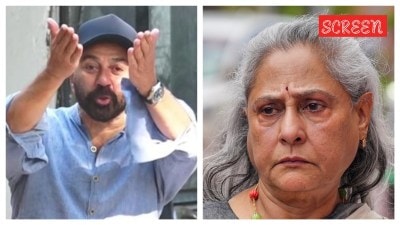
Days before Dharmendra breathed his last, a video surfaced in which his elder son Sunny Deol was seen folding hands and scolding the paparazzi for capturing the proceedings inside their Juhu residence. “Aapke ghar mein maa-baap, bachche hain? Sharam nahi aati? Ch**iyo ki tarah video bana rahe ho,” he said. That prompted a lot of backlash, even from members of the film industry.