Journalism of Courage
 4 min read



VADODARA, March 8: In the land of the Mahatma and prohibition, the very Harijans whom he called Vaishnavjan, are pushed into consuming liquor by none than the keepers of the law. And that too in Vadodara, which prides itself as the cultural capital of Gujarat.
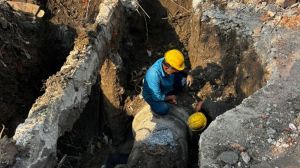
Yes. Vadodara Municipal Corporation VMC officials encourage their safai kamdars, who clear clogged sewers, into drinking by giving them money before they dive into manholes without the bare minimum protection of oxygen masks and gloves. The drink supposed to help them overcome the smell.
Called the dubki diving team, comprising 50 persons 8212; many of whom go up to 20 feet deep 8212; the workers are given anything ranging from Rs 10 to Rs 100. Since government money cannot be used for buying liquor, the officials pay for it. Sometimes, the workers themselves come drunk.
Top civic officials as well as those at the ward levels and engineering staff none of whom wants to be quoted, for obvious reasons confessed that they do give workers money for booze.
8220;After all, no sane person can enter the manholes,8221; was the justification offered by a senior official.
Head of the Preventive and Social Medicine at the SSG Hospital Gita Joshi said that drinking liquor does not help in any way but only mentally prepares the worker to work in the environment and this is not healthy.
Jagdish Solanki, a worker who cleans the drains at the Atladara sewage treatment plant, says, 8220;we work in such conditions that we have to drink to fight the nauseating smell inside the sewers8221;.
And Ambalal Solanki, 25, a daily wager, who takes money for liquor, says,8220;We do not get masks and gloves. And if anything goes wrong we do not get any benefits, as we are daily wagers8221;.
Why daily wagers, even those on the rolls aren8217;t given masks and gloves.
The workers have to hold their breath for nearly three minutes when they go down to clear blockages. 8220;Until they come out, we are in tension,8221; an official says. Another official says that giving liquor to the workers may be wrong, 8220;but then there are no options8221;, unless the safai workers 8220;develop the will to stop drinking8221;.
Deputy municipal commissioner general I B Peerzada says masks and gloves were provided to the workers some three years ago. 8220;But we stopped handing them out as the workers did not use it,8221; he said.
Municipal commissioner G R Aloria, who denied that officials paid workers for liquor, said programmes would be initiated after a fortnight to reorient the workers. He said the corporation would also do the 8220;needful8221; about masks and gloves.
Explains an officer: 8220;It8217;s a vicious circle. The bad condition compels them to drink. They eat less and the health is affected. And as a result their immune system is weakened.8221; Small wonder that many have contracted tuberculosis, respiratory infections and minor skin diseases.
K D Dabhi, a doctor at the government hospital, says every year 25 workers are referred to the tuberculosis hospital.
According to N C Patel of the VMC8217;s dispensary in Jubileebaug, currently 30 civic employees are undergoing treatment for TB. Of this, 75 per cent are safai workers. He says the sewage workers also suffer itching sensation and fungal infections.
VMC labour welfare officer Kantibhai Solanki, who a report on the workers8217; conditions to the National Commission for Safai Workers, advocates attention to their education, health, and pay.
Asked how many of his recommendations he had initiated, the welfare officer said he had organised anti-liquor programmes. As for VMC8217;s efforts, the last health check-up of safai workers was in 1992.