14 min read
© The Indian Express Pvt Ltd



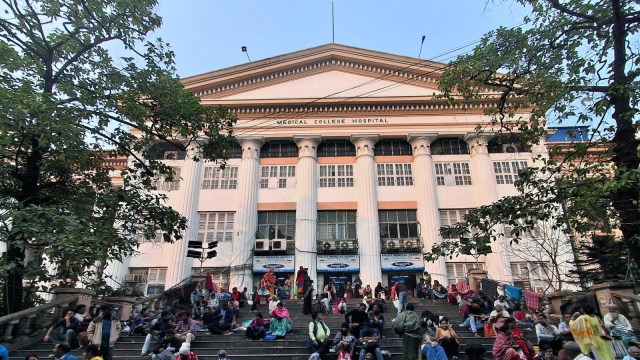 The founding vision of the Calcutta Medical College had turned out to be, more for better than for worse, in keeping with the Minute that followed shortly. (Express Photo by Partha Paul)
THE FIRST ever medical college anywhere in the country, focused exclusively on allopathy or the Western medical system, was set up on January 28, 1835. It was quaintly called “Medical College, Bengal”, which has since gained currency as Calcutta Medical College. It was this breakthrough in modernity that served as the immediate impetus for Thomas Macaulay’s much-maligned Minute on Education that pushed for English-medium, Western-style education. Macaulay wrote his Minute just five days after the commencement of the medical college, as the first ever law member of the Governor-General’s Council of India.
Little-known as it is, this aspect has been overlooked in the debate reignited by Prime Minister Narendra Modi’s recent remarks about Macaulay’s impact on India and its subsequent journey.
The founding vision of the Calcutta Medical College had turned out to be, more for better than for worse, in keeping with the Minute that followed shortly. Of a piece with the novelty of allopathy as the sole curriculum was the adoption of English as the sole medium of instruction.
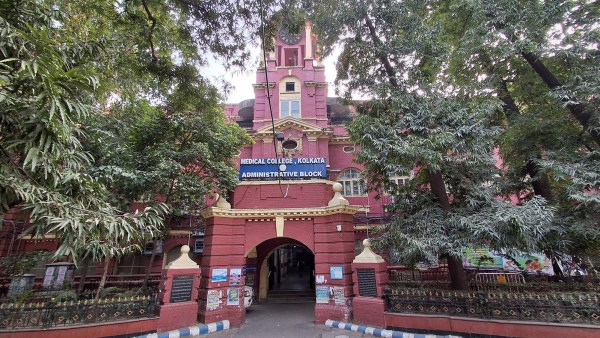 Eden Hospital Bhavan at the Calcutta Medical College. (Express Photo by Partha Paul)
A push for Arabic
The combination of the curriculum and the medium of instruction marked a leap in the modernisation of scientific education. The medical college replaced a 13-year-old abortive experiment called Native Medical Institution which had tried to teach in local languages a disparate blend of allopathy with unani and ayurveda.
Equally remarkable, Macaulay’s Minute of February 2, 1835 to Governor-General William Bentinck came in the wake of a social reform which was inherent to the conception of the medical college. In a departure from traditional exclusionary practices, its portals were open to all Indians irrespective of caste and creed.
The medical college was, in fact, designed to keep away the cultural sensitivities that had hampered its precursor. As acknowledged in a British parliamentary committee report of 1833, the admission policy of the Native Medical Institution had been elitist and nepotistic: “Hindoos and Mussulmans were equally eligible, if respectable; the sons of native doctors in the service to be preferred.”
Even so, the superintendent of that short-lived institution, John Tytler, who had translated European medical texts into Arabic, lobbied with Macaulay even at a late stage to drop the idea of introducing English as the medium of instruction in the medical college that was due to succeed it.
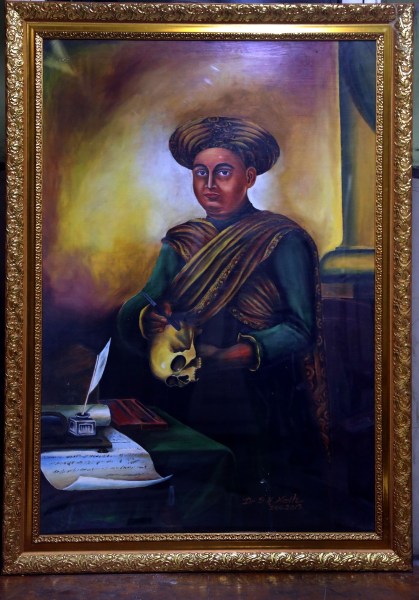 A painting of Madhusudan Gupta, a student of the first batch who performed the first ever dissection of a human cadaver. (Express Photo by Partha Paul)
After meeting him, Tytler wrote to Macaulay on January 26, 1835, pleading that while English could be “taught thoroughly to as many as have opportunities to learn it’, science should be “diffused generally by means of the languages of the Country”.
His reasoning for insisting on a vernacular for teaching science smacked of condescension: that no matter how thoroughly English was taught to natives, all they were capable of acquiring was “a mere smattering of English”. Then, betraying the vested interest of the Orientalist that he was, Tytler asserted that even vernaculars were insufficient to serve the purpose: no “derivative language can be understood clearly or used accurately” without a thorough grounding in “the parent languages”.
Of the three parent languages in India — Arabic, Persian and Sanskrit — he knew that there was an issue with the last mentioned. Since the language of the Hindu scriptures was traditionally the preserve of upper castes, none of the existing Sanskrit colleges was open to the lower castes who constituted the vast majority of Hindus. In a tacit acknowledgment of this anomaly in the Hindu society, Tytler wrote with a touch of delicacy that the parent languages could be taught “as much as can be done with propriety among all classes above the very lowest”.
In a further bid to ensure that Macaulay’s choice fell on Arabic, Tytler’s own speciality, he cast a shadow on the suitability of Persian too, so that Arabic remained the only choice.
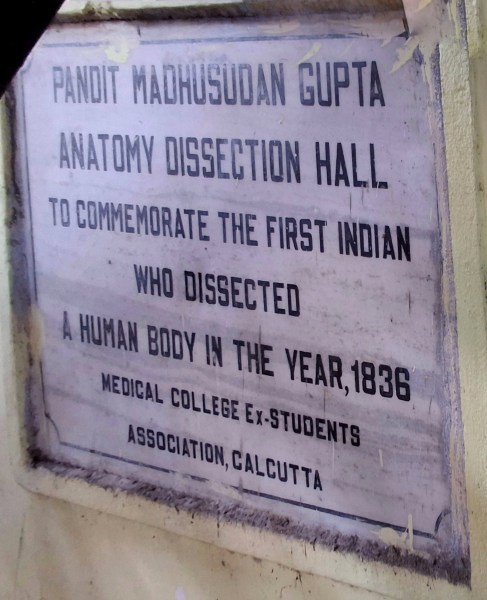 Plaques commemorating the first ever dissection of a human corpse at Calcutta Medical College. (Express Photo by Partha Paul)
This was how he framed his argument for seeking to create a fresh medical jargon for Indians drawing on the European parallel of extensive usage of Latinisms. “The technical language of Science must in all cases be different from that of the common people and that as in the case of the modern European and classical languages on the one hand, or the modern Indian and Arabic on the other, the parent language has been highly cultivated and used for the purposes of Science”.
If he mentioned only Arabic as the Indian counterpart of the European classical languages, the implication was that Persian failed to meet his criterion — that the medium of instruction should not only be an Oriental language but also be different from that of the common people. This was because, as Tytler asserted, “the difference between what is commonly called and used as Hindostanee and Persian is so very small as to be more nominal than real”.
Macaulay’s pushback
Recent historical research shows that Tytler’s advocacy of Arabic was not always so round-about. In her 2019 book Beyond Macaulay: Education in India 1780-1860, Jawaharlal Nehru University professor Parimala Rao says, “Tytler opposed the use of Sanskrit to teach sciences and during 1829-33 vigorously campaigned to make Arabic the sole language through which to teach sciences, including medicine.” In other words, he could get away with a more candid display of his pro-Arabic bias before Macaulay arrived in Calcutta in September 1834.
On January 28, 1835, the very day the medical college came into existence, Macaulay responded dismissively to Tytler saying, “I deny every one of your premises without exception.” As regards one such premise, that Arabic was to India what Western classical languages were to Europe, Macaulay, a historian and poet, wrote: “I deny that no derivative language can be well understood without a knowledge of the original language; the best and most idiomatic English has been written by men who knew neither Anglo-Saxon nor Norman French.”
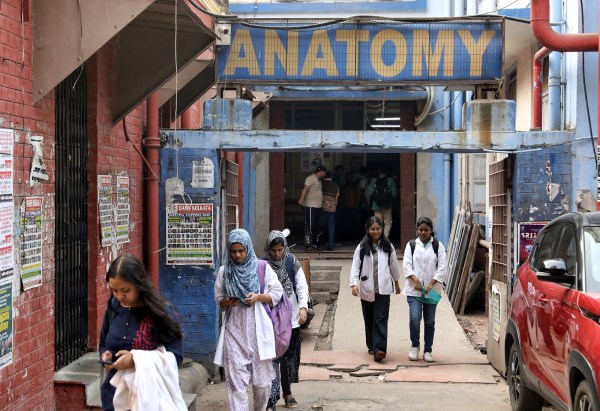 Anatomy Building at the medical college. (Express Photo by Partha Paul)
In the event, Macaulay specially had Hindus in his mind when he complimented the proficiency in English of those who had no knowledge of its parent languages. This is evident from an anonymised reference in his much-discussed Minute of February 2, 1835 to Tytler’s claim that Indians were incapable of learning beyond a smattering of English. He took that as a view representative of the Orientalists who were locked in a larger debate with Anglicists like him over the medium of instruction across British India.
“It is taken for granted by the advocates of oriental learning, that no native of this country can possibly attain more than a mere smattering of English,” Macaulay said, in the Minute addressed to Bentinck. Vouching for his own experience to the contrary, he added, “Indeed it is unusual to find, even in the literary circles of the continent [Europe], any foreigner who can express himself in English with so much facility and correctness as we find in many Hindoos.”
Thus, a comparison between the two documents reveals that his letter to Tytler had served, however unwittingly, as the first draft of the Minute that is said to have changed the course of India’s history. The most substantive commonality relates to Tytler’s startling admission in the first place that the “Eastern Science” he wanted to be taught in an Oriental language contained all the same a degree of “falsehood”.
Taking his word for it, Macaulay put it in the letter that he disagreed with Tytler’s assumption that teaching such falsehood was “necessary in order to make the truth palatable to the Natives”. He said that the poor sale of Arabic and Sanskrit books (in contrast to the high demand for those in English) and the unwillingness of students to learn those Oriental languages (without being paid stipend) showed that “the native population if left to itself would prefer our mode of education to yours”. Among the examples of falsehood cited by Macaulay in this regard was the “sea of butter”, an allusion to Hindu cosmology.
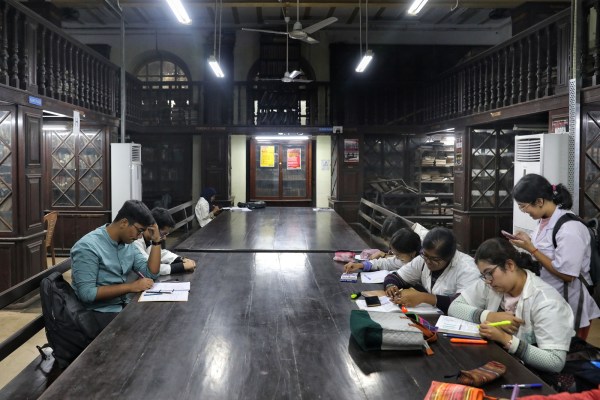 Medical students at the medical college’s library. (Express Photo by Partha Paul)
In his Minute close on the heels of this letter, Macaulay repeated that loaded expression in the same vein: “geography made of … seas of butter”. Also, taking a swipe at unani and ayurveda, he decried “medical doctrines which would disgrace an English farrier”. The sweeping denunciation of ayurveda and unani was thus in reaction to the urging of Tytler and other Orientalists to teach even allopathy and other western sciences in a parent language of the dialects spoken in India.
The birth of the Minute
Macaulay’s Minute served to break the deadlock between Orientalists and Anglicists since the previous year in the official body in charge of education, Committee of Public Instruction. Though he happened to be the committee’s president, Macaulay refrained from participating in its debate. For, as he put it in the Minute to Governor-General Bentinck, he chose to “reserve what I had to say on the subject till it should come before me as a member of the Council of India”.
It was while recommending the Anglicist position in his Minute that Macaulay made his infamous observation about the comparative quality of Oriental literature. Clearly, that observation was based on not just his colonial mindset but the admission of Orientalists that the literature they were championing was riddled with falsehood.
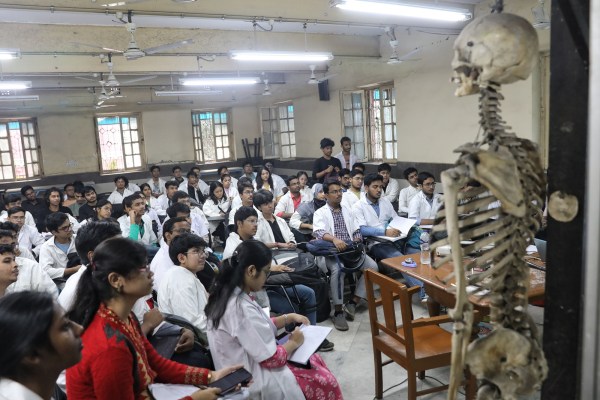 Students during their classes at the college’s Anatomy Building. (Express Photo by Partha Paul)
“I am quite ready to take the Oriental learning at the valuation of the Orientalists themselves.” Immediately after this opening gambit came the words that he could never live down. “I have never found one among them who could deny that a single shelf of a good European library was worth the whole native literature of India and Arabia. The intrinsic superiority of the Western literature is indeed fully admitted by those members of the committee who support the Oriental plan of education.”
Another notorious excerpt of the Minute, this one touched on by Modi, pertained to Macaulay’s plan to educate a class of “interpreters” in English so that they were “Indian in blood and colour, but English in tastes, in opinions, in morals and in intellect.” Taken out of context, these words have come to symbolise the colonial dimension of cultural imperialism.
Even as this reading has acquired a sharper edge in the context of the politics of restoring Indian pride, the question that remains is whether Modi is really justified in alleging that Macaulay “destroyed” India’s education system? And worse, that he “broke India’s self-confidence and instilled a sense of inferiority”?
In reality, Modi has glossed over Macaulay’s explanation of the strategy to use that class of interpreters as a bridge between English and Indian languages. His exact phraseology in the Minute was to leave it to that class “to refine the vernacular dialects of the country, to enrich those dialects with terms of science borrowed from the Western nomenclature, and to render them by degrees fit vehicles for conveying knowledge to the great mass of the population”.
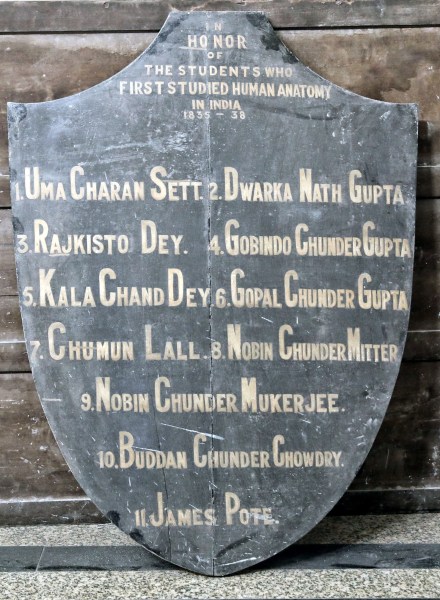 A plaque commemorating the first batch to study human anatomy at the college. (Express Photo by Partha Paul)
Thus, for all the opprobrium heaped on him, Macaulay had actually envisaged an India where those he labeled as interpreters — products of an English-medium institution like the Calcutta Medical College — would help enrich the Indian languages with Western scientific jargon so that they could be used as the medium of instruction for the masses.
This is exactly what Madhya Pradesh finally initiated in October 2022 when it launched MBBS books in Hindi for the first year of that course. The push for this radical change came from the Modi government’s New Education Policy 2020, which promotes the use of Indian languages as the medium of instruction in higher education, including medicine. Despite the incentives on offer, few have opted though to write exams in Hindi. But other states such as Uttar Pradesh, Uttarakhand and Bihar are already following the lead provided by Madhya Pradesh.
It’s ironic therefore that the very Prime Minister instrumental in vindicating Macaulay’s Minute with his 2020 policy has revived the debate demonising him. Macaulay deserves to be judged more by his public actions and their consequences than by his rhetoric in an internal document, especially because it was devised to overcome the opposition to the English medium of instruction from within the colonial establishment. His Minute did have the intended effect of meeting the approval of Bentinck, in the form of a resolution adopted by his Council on March 7, 1835.
In the circumstances, it was perhaps the best decision that the Bentinck administration could have taken, as borne out by the generations of thinkers, professionals, social reformers and political leaders produced by the English medium of instruction. The Macaulay-inspired decision has benefited India, arguably, no less than the social reform that Bentinck is best known for: the 1829 abolition of Sati.
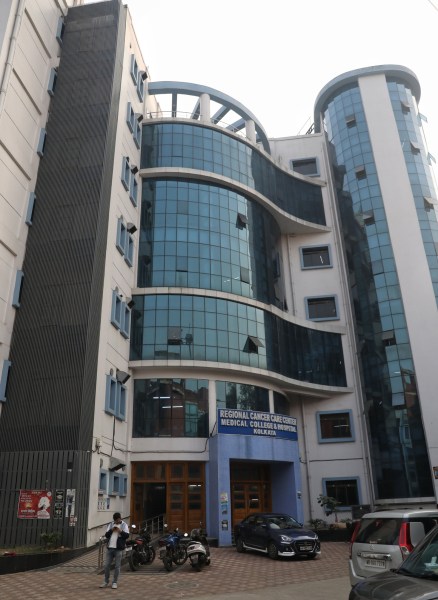 A modern regional cancer care centre was launched at the medical college in Kolkata. (Express Photo by Partha Paul)
Macaulay’s intervention had also spared doctors from training in allopathy through the circuitous route of Arabic. Whatever the relative merits of ayurveda and unani and however much the Modi government promotes them through the Ministry of Ayush created by it in its early days in 2014, allopathy remains by far the most preferred mode of treatment for resident Indians and medical tourists.
Macaulay’s education policy propelled India within a year of the establishment of Calcutta Medical College to cross a basic but essential milestone in medical education. On January 10, 1836, Madhusudhan Gupta, a student of the first batch, performed the first ever dissection of a human corpse in the history of Indian medical education. For what is now a routine part of teaching anatomy, the colonial administration then deployed security at the Calcutta Medical College as a crowd of orthodox Hindus had gathered in front of it to protest what they considered an unholy act.
Not for nothing is January 10 still commemorated as “Medical Education Day” in West Bengal. Whether Macaulay’s involvement in shaping this pioneering institution is remembered or not, it doesn’t sit well with the propaganda that he destroyed the Indian education system with his far-reaching Minute.
Manoj Mitta is an author whose most recent book is Caste Pride: Battles for Equality in Hindu India