6 min read
© The Indian Express Pvt Ltd



 There has been a consistent special strategy in place for the past two years. There is a joint action plan. It’s also not the work of just two years:
Vivekanand Sinha
There has been a consistent special strategy in place for the past two years. There is a joint action plan. It’s also not the work of just two years:
Vivekanand SinhaUnder Vivekanand Sinha, Additional Director General (ADG), Anti-Naxal Operations, Chhattisgarh, the state police, in coordination with central forces, has dealt a severe blow to the banned CPI-Maoist. He speaks to Deeptiman Tiwary on the killing in Andhra Pradesh of Maoist military commander and Central Committee member Hidma Madvi and the road ahead for security forces and the Maoists
After years of pursuit, security forces have finally killed Madvi Hidma. What does this encounter mean operationally for the security grid in Chhattisgarh, and how significant is this moment for the forces on the ground?
It’s a significant development for security forces across the country. For the past two years, we have been working on a strategy with central armed forces. In this period, we neutralised the general secretary of the CPI Maoist (Nambala Keshava Rao alias Basavaraj) and five Central Committee members. That has created significant pressure on the Maoists. This pressure led them to move out of Chhattisgarh, once considered their safe haven, and look for shelter in bordering areas.
One wing of the CPI-Maoist led by Bhupati alias Sonu and by Rupesh alias Satish have advocated the surrender of arms. You have seen mass surrenders recently in Chhattisgarh and Gadchiroli (Maharashtra). They are joining the mainstream.
Many in Telangana and Andhra Pradesh are also following the same path. Central Committee members such as Pulluri Prasad Rao alias Chandranna have surrendered recently. It is all because of the coordinated strategy of the forces and the pressure we have created. The party is now facing an internal rift. They are also now moving in smaller groups without arms and in civvies. Hidma also went to Andhra Pradesh and was neutralised there. It is a very big achievement because he created the PLGA (People’s Liberation Guerrilla Army) battalions and was involved in many heinous incidents.
Hidma was known to be the architect of the movement’s major tactical successes — from Tadmetla to Minpa. With his elimination, where does this leave the Maoist organisation in Bastar?
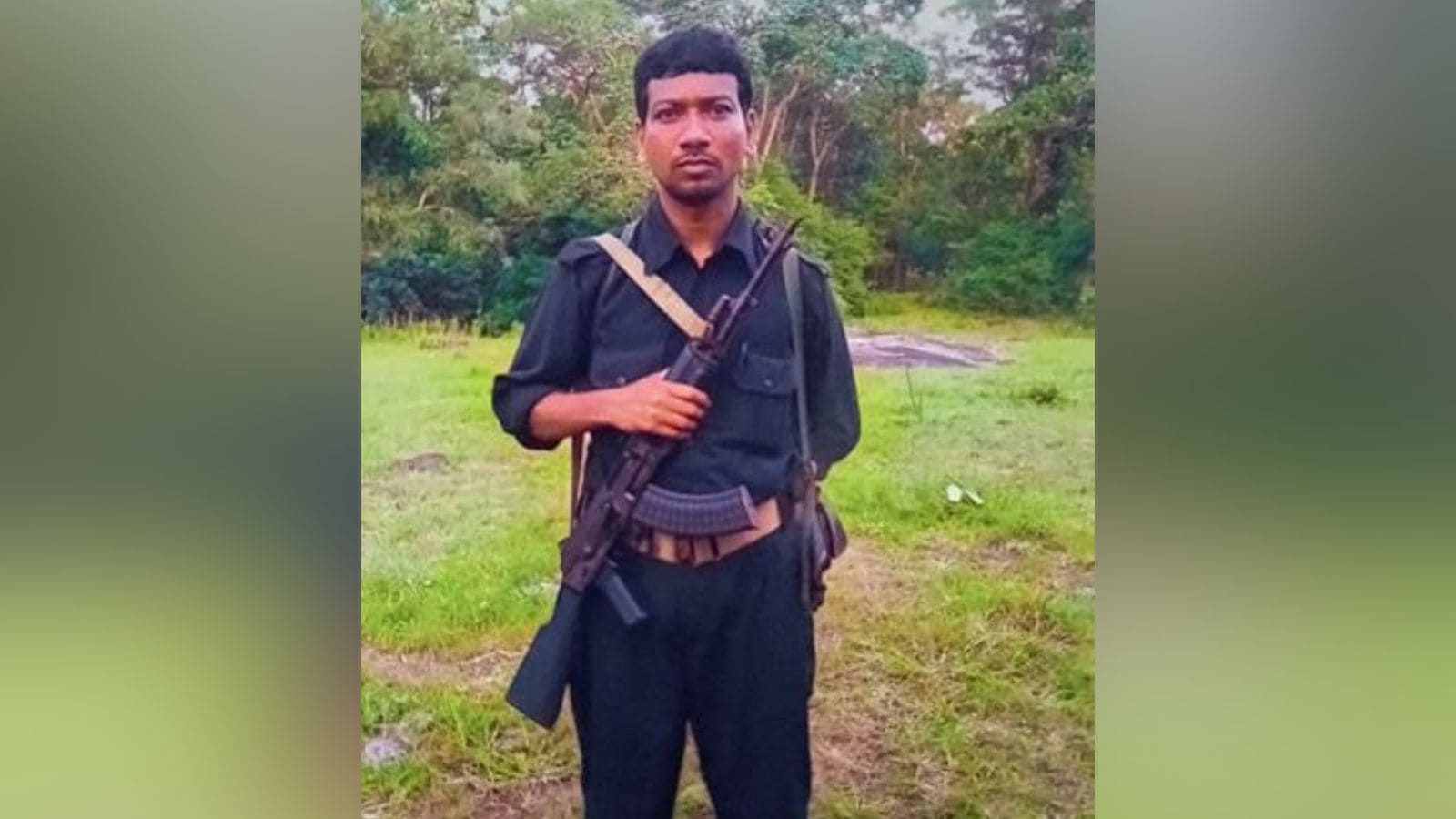 Top Naxalite commander Madvi Hidma, who had masterminded several attacks over the last two decades, was killed in an encounter in neighbouring Andhra Pradesh on Tuesday. (CRPF via PTI Photo)
In Chhattisgarh, there is no active senior leadership of the party left. Even Devuji and Hidma, who were advocating armed struggle, have taken shelter on the border. And most of the time their location was in Telangana. Hidma was also looking for shelter in Andhra Pradesh.
In Chhattisgarh, the party was led by Bhupati, Ramchandra Reddy, Basavaraju, Chalapati and Sudhakar. All of them have been neutralised. On Hidma, I would say the party is more important than the military formation. It is from the party that the instructions follow. Hidma only executed these instructions. He became a mythical figure because of us and the media. He was recently made Central Committee member. But there is no documentary proof that he was given charge of DKZSC (Dandakaranya Special Zonal Committee).
Over the last few years, forces seem to have consistently pushed the Maoist movement into smaller corridors, with deeper incursions into Abujhmad and southern Sukma. What operational shifts or changes in coordination have enabled this edge over the Maoists?
There has been a consistent special strategy in place for the past two years. There is a joint action plan. It’s also not the work of just two years. Lot of sacrifices have gone into this. Large areas were devoid of security and administrative presence. Since 2019, a number of camps have been opened. We have opened 87 camps in the core areas of the Maoists.
This has significantly reduced the security vacuum. The distance between any two camps has reduced from 45 km to 20 km, at places even 10 km. That gave a certain level of consistency to security operations. Earlier, if an operation happens in an area, the security forces would return to the area three months later. This would give time to the Maoists to regroup.
Now there is relentless pressure. There is no area left for free movement of Maoists. They have been constricted and forced to abandon their earlier strategies. They now move in smaller groups of three to four.
In Chhattisgarh, the District Reserve Guard (DRG) played a key role in the anti-Naxal operations.
It is said that any problem can be fought only by the locals. Earlier, most of the forces came from outside Bastar. There is a misconception that the DRG is made up of surrendered cadres. That’s not true. It’s mostly local tribals who are recruited into the force. We have also formed a unit of the Bastar Fighters that’s made up of locals.
The DRG guys know the terrain like the palm of their hands. They know the culture, speak the local language, understand Maoist movement patterns and their modus operandi. They can survive in the jungle for a week without any outside support. That has given us great advantage. The DRG has also been trained in jungle warfare and has trained with Andhra’s Greyhounds.
What does this operation tell us about the current state of intelligence penetration and community engagement in the region?
We have a multi-pronged strategy that combines security, trust building and development. We have also learned hard lessons from the past. There was sensitisation on how to conduct operations; how to lead an operation and go to the logical conclusion without collateral damage.
Second thing is coordination and cooperation with border states, with whom we share inputs on a real-time basis. Also, we have engaged with the locals to say that we are there for them. Once we gained that trust, villagers started coming to us.
With Hidma gone, what’s the next frontier for the Bastar security forces?
Our strategy is to clear, hold and build. We clear the area, establish camps and then participate in developmental activity. We have been conducting operations on a consistent basis, leading to surrenders.
With Hidma gone, it will be a setback to the underground formations. His followers would now come forward and surrender. We are committed to eradicating the problem and ushering in development.