


📣 For more lifestyle news, click here to join our WhatsApp Channel and also follow us on Instagram
Tags:


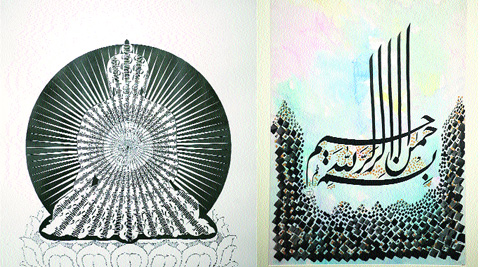
In 2010, Jamyang Dorjee from Sikkim created the longest calligraphy scroll using handmade Tibetan lokta paper measuring 16.3 metres, with 65,000 Tibetan characters. Inspired by a photograph in a Chinese newspaper where he saw a man holding a certificate for making the longest calligraphy scroll measuring 15 metres (which Dorjee later discovered to be false), he set out to create the record that took six months to complete. Dorjee’s 18 new works that lend an insight into Buddhist calligraphy in Bhoti are part of an exhibition titled “Divinity in Syllables”, which is on display at the Art Gallery in India International Centre, Annexe.
Dorjee’s calligraphic work Thamsik, looks at the spiritual bond between a teacher and his student, an important aspect of Buddhism.


Siddiqui, who also learnt Tibetan calligraphy in 2003, is quick to point out the similarities between Islamic and Buddhist calligraphy.
“Often, we make a large letter across the canvas using the brush without dipping it in ink after the first time. Dorjee has also used this technique,” says Siddiqui. “In Buddhist calligraphy, the entire focus was on signs and teachings of Buddhism, not on art,” says Dorjee.
Kshipra Simon, who has curated the show, says she was inspired by a small discussion that triggered the idea for the show. “If you see the works in the exhibition, they are at peace and harmony. If these letters can be at peace, why can’t people be?” she says.
While the onset of laptops and computers might have posed a threat to the world of calligraphy, Dorjee feels there are few emotions that a laptop cannot imitate. “When you type using a laptop, you use your hands and mind. But when you practise calligraphy, you do it with your heart,” says 60-year-old Dorjee.
The exhibition is on display
till August 16 at IIC Annexe
Building, Lodhi Road


