7 min read
📣 For more lifestyle news, click here to join our WhatsApp Channel and also follow us on Instagram
© IE Online Media Services Pvt Ltd



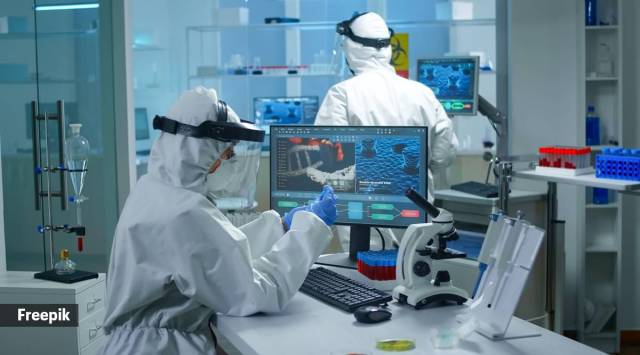 Nuclear medicine can help in accurate and early diagnosis of various conditions, leading to better treatment planning and improved patient outcomes (Representational image/Freepik)
Advancements in medical sciences and technology have done wonders in improving the quality of health and lifespan of the human race. Additionally, it has also helped eradicate certain ailments from various parts of the world. But, the fear of the big ‘C’ still looms over our heads. According to the World Health Organization (WHO), cancer is a leading cause of death worldwide, accounting for nearly 10 million deaths in 2020, or nearly one in six deaths. However, despite these dismal figures, various cancers are curable today and a few of them — like cervical cancer — can also be prevented, all due to the availability of HPV vaccines, known to have 100 per cent efficacy. But there is another wonderful technology used in cancer diagnosis and treatment — nuclear medicine.
Today, let’s understand more about it, and its role in treating cancer.
“Nuclear medicine is a rapidly advancing field of medicine that uses small amounts of radioactive materials, called radiopharmaceuticals, to diagnose and treat a variety of medical conditions, including cancer. Unlike chemotherapy, which can cause damage to healthy cells along with cancerous cells, nuclear medicine targets cancer cells while sparing normal tissues,” explains Dr G Vamshi Krishna Reddy, Director-Oncology Services, Consultant Medical Oncologist and Hemato Oncologist.
Nuclear medicine can help in the accurate and early diagnosis of various conditions, leading to better treatment planning and improved patient outcomes. Dr Anshu Sharma Consultant and Head, Nuclear Medicine and Pet-CT Kokilaben Dhirubhai Ambani Hospital Mumbai adds, “It can also be used to monitor the progress of treatment and detect potential relapses. In some cases, nuclear medicine offers targeted therapy that can help treat specific diseases with fewer side effects compared to conventional therapies”.
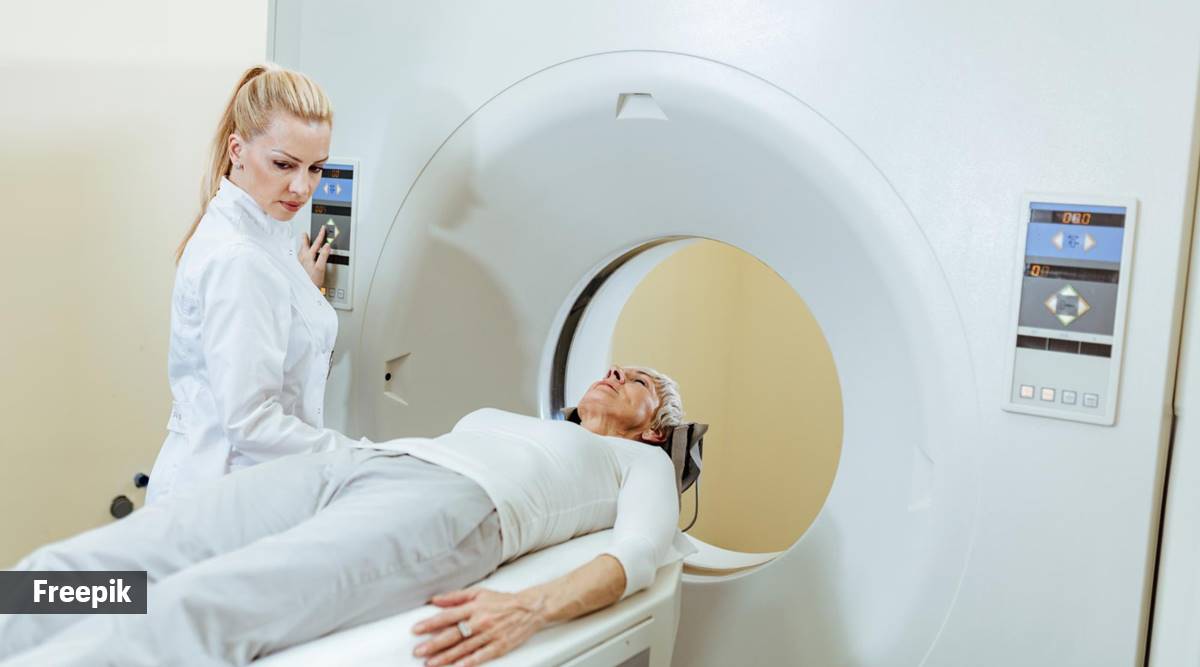 Nuclear medicine is a rapidly advancing field of medicine that uses small amounts of radioactive materials, called radiopharmaceuticals, to diagnose and treat a variety of medical conditions, including cancer. (Representational image/Freepik)
Nuclear medicine plays a crucial role in oncology, both in diagnosing cancer and in providing targeted therapy for certain types of cancer. Dr Sharma shares nuclear medicine’s role in cancer treatment as:
Diagnosis and staging: Nuclear medicine techniques, such as Positron Emission Tomography (PET) scans, are invaluable in diagnosing various types of cancer. They help identify tumours, determine their size and location, and assess whether cancer has spread (metastasized) to other parts of the body. This information is essential for determining the stage of cancer and planning the appropriate treatment approach.
Treatment planning: By providing detailed information about cancer’s location and extent, nuclear medicine helps oncologists develop personalized treatment plans for patients. It helps determine whether surgery, radiation therapy, chemotherapy, or a combination of these treatments is most appropriate.
Targeted therapy: In some cases, nuclear medicine can be used as a targeted therapy for cancer, known as radioimmunotherapy or radioligand therapy. This approach involves attaching a radioactive substance to a molecule that specifically targets cancer cells, allowing for precise delivery of radiation directly to the tumour while minimizing damage to healthy tissue. This can result in fewer side effects compared to traditional radiation therapy or chemotherapy.
Monitoring treatment response: Nuclear medicine can also be used to assess the effectiveness of cancer treatments. PET scans and other nuclear medicine imaging techniques can help doctors monitor how well a tumour is responding to therapy and make necessary adjustments to the treatment plan.
Chemotherapy is a systemic treatment that involves using powerful drugs to kill cancer cells throughout the body. It can be effective in treating many types of cancer, but it often has significant side effects due to its impact on healthy cells as well.
Nuclear medicine, on the other hand, offers a more targeted approach, particularly when used as a therapeutic option. It allows for more precise delivery of radiation to cancer cells, potentially leading to fewer side effects. However, nuclear medicine’s therapeutic applications are limited to specific types of cancer, and it may not be suitable for all patients.
“It is not correct to say that nuclear medicine is better or worse than chemotherapy, as they are different treatment modalities with different applications,” explains Dr Sharma.
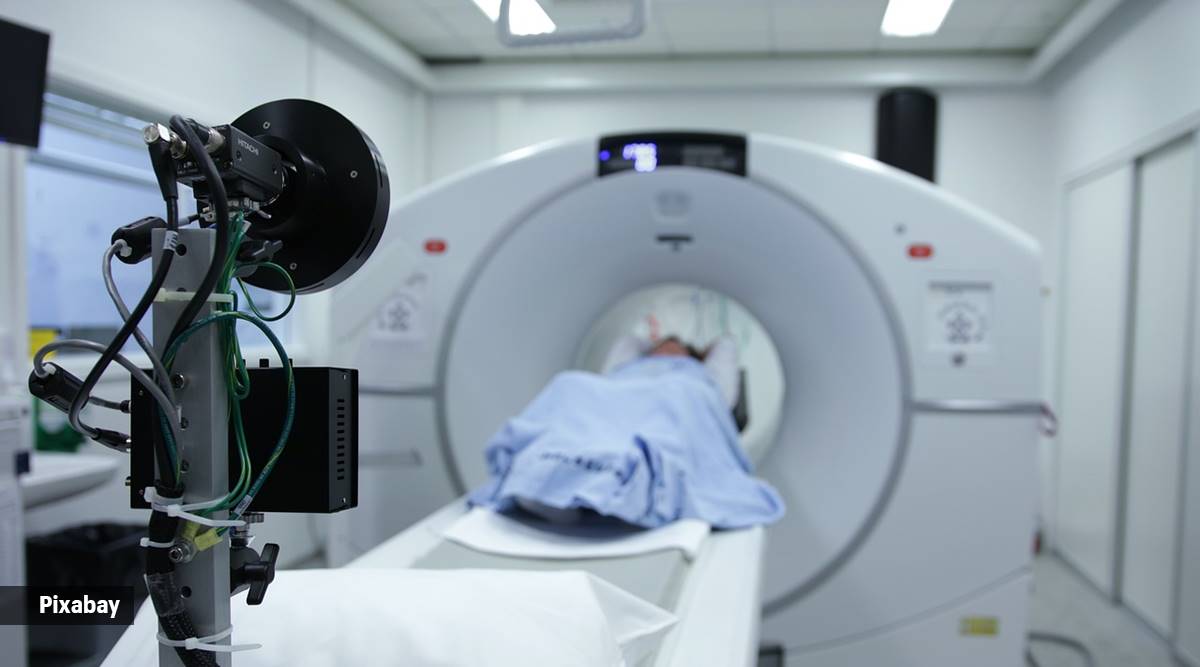 There are a variety of cancers which are sensitive to “radiation”. These include Prostate Cancer, Thyroid Cancer, Neuroendocrine Cancers, whereas they are not so sensitive to Chemotherapy. (Representational image/Pixabay)
He adds, “While nuclear medicine plays an essential role in oncology today, particularly in diagnosis, staging, and monitoring treatment response, the choice between nuclear medicine and chemotherapy, or their combination, depends on the specific type and stage of cancer, as well as the patient’s overall health and treatment goals”.
There are a variety of cancers which are sensitive to “radiation”, including prostate cancer, thyroid cancer, neuroendocrine cancers, and are not so sensitive to chemotherapy. Dr Karuna Luthra, Director, Department of Nuclear Medicine at Sir HN Reliance Foundation Hospital, Mumbai says, “This is where targeted radiation delivered via Beta isotopes (such as I-131, Lu177) or Alpha isotopes (like Ac225) is useful for killing tumour cells”.
Dr Luthra adds that the advantage of nuclear medicine is that it allows this radiation to be delivered specifically to tumour cells anywhere within the body while sparing normal body cells – much like a “targeted missile”.
Dr Sameer Sonar, Fellow, Harvard Medical School, USA, Group Director – Nuclear Medicine, PET CT Theranostics, Ruby Hall Clinic Group Hospitals agrees with Luthra and shares, “The malignancies such as thyroid cancer, prostate cancer, neuroendocrine tumour, liver cancers can be effectively treated with excellent treatment response that views prolonged survival in- spite of extensive metastasis disease spread”.
Yes, India is ahead of the USA in the use of nuclear medicine to treat cancer. “Nuclear medicine has been available in India for the last 50 years,” says Dr Sonar, adding that “PRRT therapies got US FDA approval last year. But, the treatments however were very widely used in Europe and Australia much before that”.
Dr Luthra explains, “Regulatory hurdles regarding the approval of radiopharmaceuticals are a major challenge to the growth of the global nuclear medicine industry. In the USA, when the FDA is convinced regarding the safety and efficacy of the molecule, the product is approved for usage. Owing to extensive toxicology testing, there are very few nuclear medicines approved by the US FDA and hence, the usage of nuclear medicine for therapy is relatively lower”.
She adds, “In India, the Atomic Energy Regulatory Board has been proactive in clearing the use of radio-pharmaceuticals for therapy. And in many ways, India and Australia are among the leading countries in the adoption of RPT”.
Dr Reddy concludes, “One of the reasons for India’s success in nuclear medicine is the country’s strong focus on research and development. India has a large pool of talented scientists and researchers who are working on innovative technologies and techniques to diagnose and treat cancer. The country has also established several research institutes and universities that are dedicated to nuclear medicine, such as the Bhabha Atomic Research Centre and the All India Institute of Medical Sciences”.
📣 For more lifestyle news, follow us on Instagram | Twitter | Facebook and don’t miss out on the latest updates!